Openers · Brampton
Garage Door Remote and Keypad Programming in Brampton
Someone in the family tried to add a remote, held the button on the ceiling unit a little too long, and now every remote in the house is dead at once.
In plain words
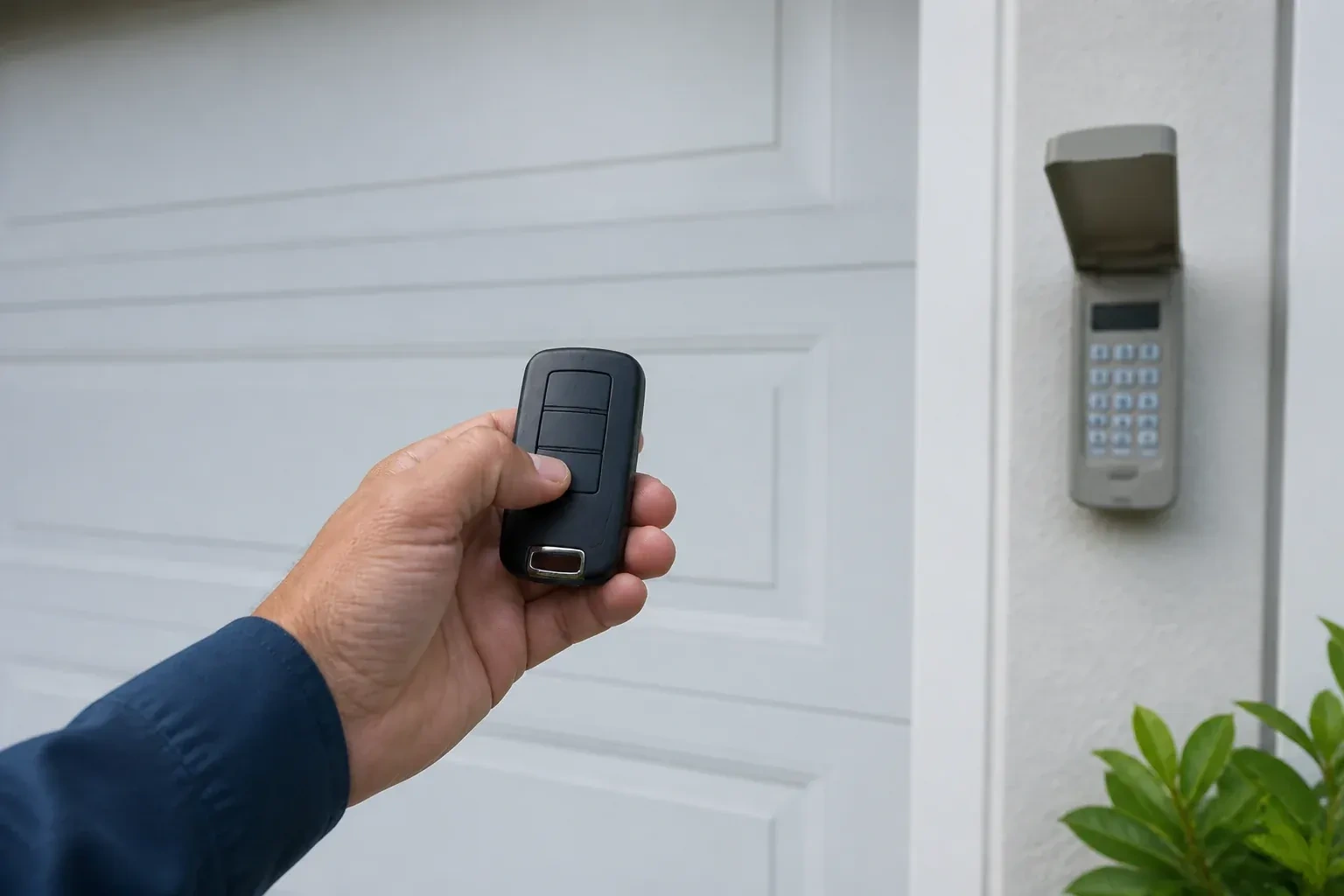
Over the years a garage accumulates controls: a remote in each car, one on a hook by the door, a keypad outside, a button in a vehicle you sold. Programming is the moment to take stock. The technician lists what exists, what works and what is missing, decides with you what should stay, and rebuilds the opener's memory to match. Each retained device is tested at the door and labelled for the door it drives. You leave with a short record of what opens the garage and what was removed, without any secret code written on it.
How the visit goesThe new car has three buttons in the mirror for garage doors. You held the old remote up to it as the manual said, the light in the car changed, and yet the door ignores it completely. The handheld remote works fine.
Garage Door Remote and Keypad Programming
How the visit goes
Vehicle buttons and phone apps
Cars with built-in garage buttons and openers with a phone connection are part of the inventory too. The technician asks which vehicles are programmed, whether a new car needs training, and whether a previous owner's phone might still be linked to a connected opener. For a vehicle, the model year matters, because some older in-car systems need a small compatibility module to talk to newer openers. For an app, the account should be in the household's name. Each of these is a control like any other and gets the same test at the door, so the check lists them alongside the handheld remotes and the keypad.
Bringing a fixed-code opener into the present
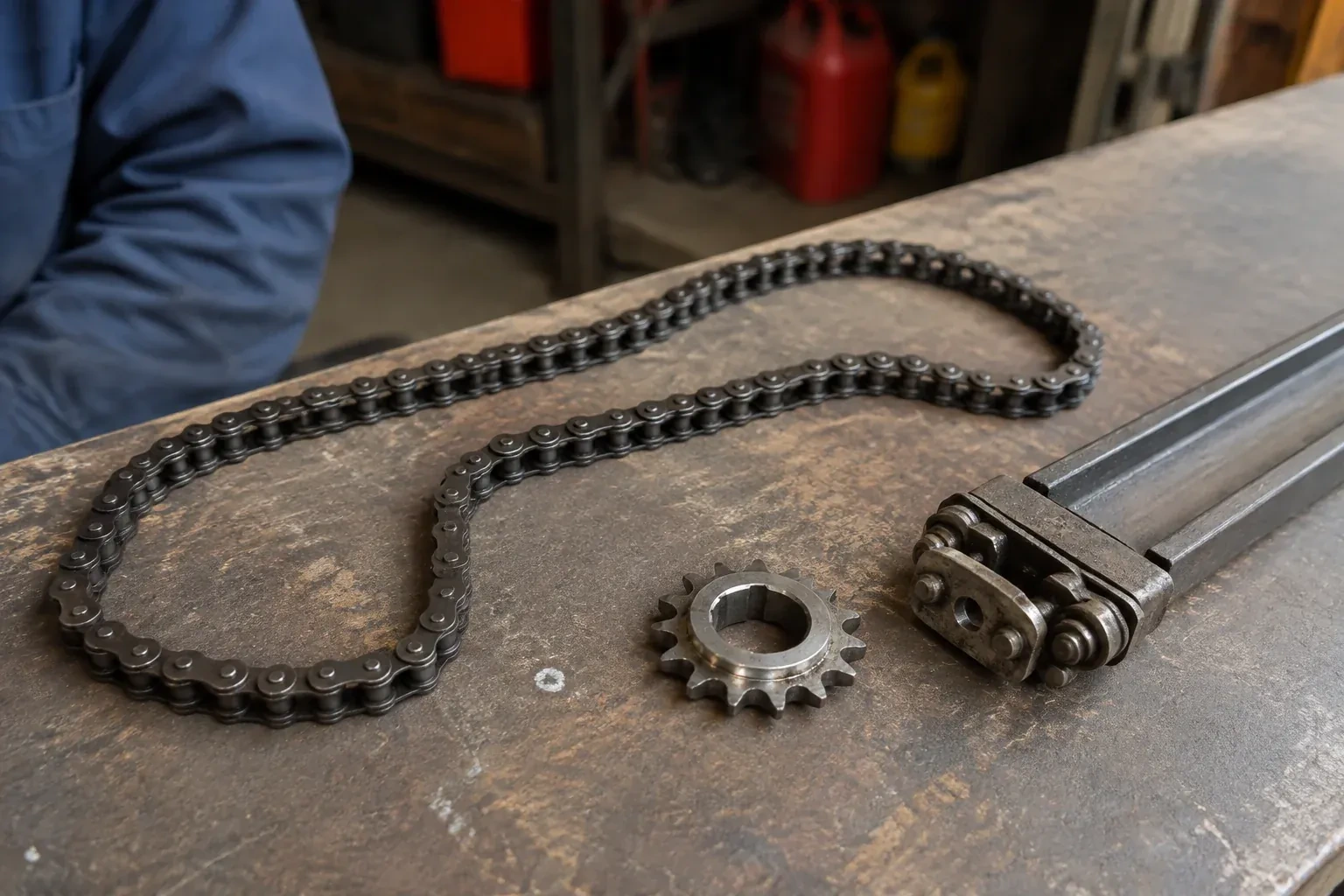
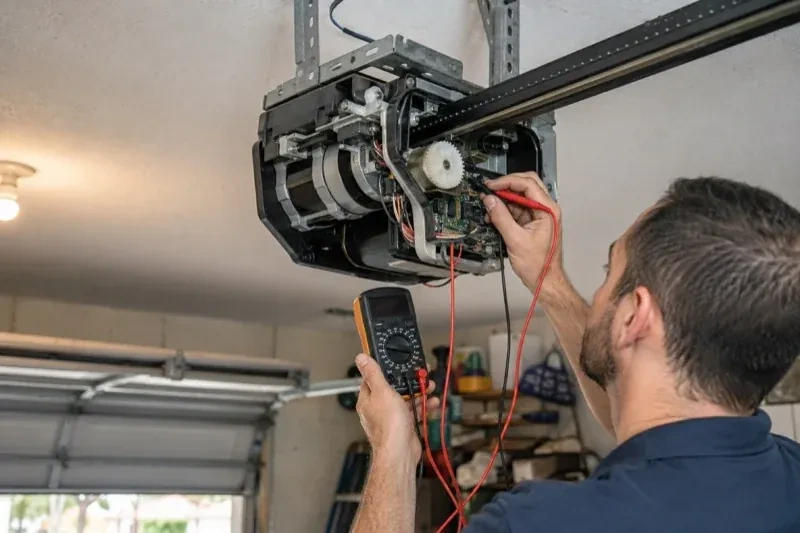
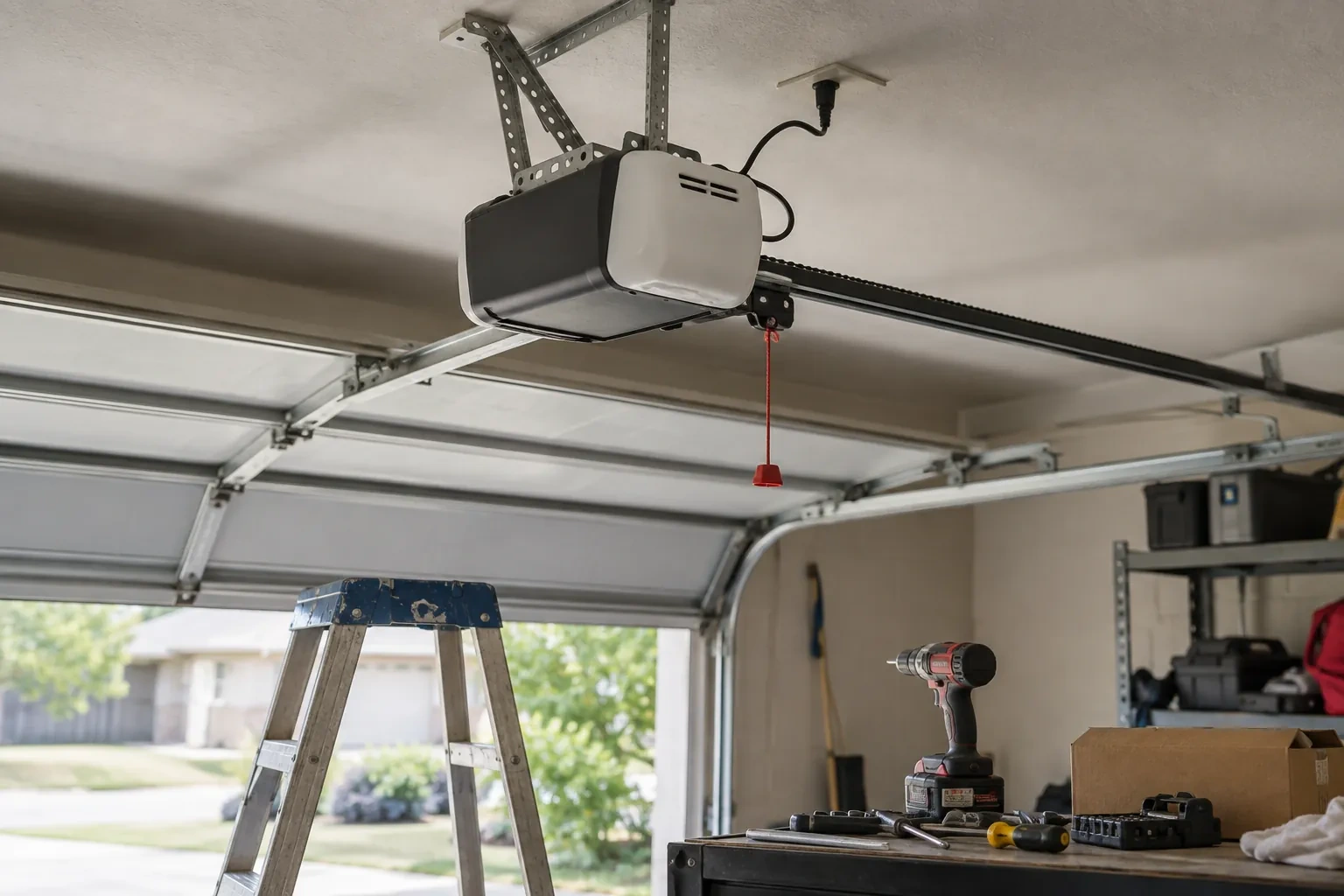
For an older opener whose remotes were set by rows of small switches and are no longer made, the work is a receiver upgrade rather than a pairing. The technician mounts a compact rolling-code receiver near the head unit, wires its two conductors to the same terminals that serve the wall button, and plugs its transformer into the ceiling receptacle beside the opener. The opener now has a modern radio and can store a handful of new remotes and a keypad. This route is used only when the opener already has photo eyes at the floor; without them, the recommendation is a new opener.
The car opens the door, and the door knows the car
Vehicle buttons are trained and tested from the driver's seat, and you know how yours was set up, since not every system uses the same two-stage method of the car learning a remote and then the opener learning the car. If you change vehicles, the new one is set up to its own instructions, and the old one's button should be cleared before the car is sold or returned from a lease. The handover note records which vehicles are programmed and to which door. Where a bridge module was fitted for an older in-car system, its location and what it does are pointed out so a future technician is not puzzled by it.
Garage Door Remote and Keypad Programming
In the van
Replacement remote (one, two or three buttons)
Wireless outdoor keypad
CR2032 and CR2016 coin cells
Add-on rolling-code receiver kit
AAA and nine-volt keypad batteries
Garage Door Remote and Keypad Programming
What affects the quote
Add-on receiver for an older opener
Converting a fixed-code opener means a receiver kit, wiring to the wall-button terminals and new remotes, quoted as an upgrade rather than a programming call.
Distance to your door
Travel is part of the visit, and a house across town and a property well outside it involve different driving time.
Compatibility of the accessory
A remote matched to the opener's generation is programmed as it is. One of the wrong generation is swapped for a compatible or universal model, and that device is a separate line.
What to have ready
- Are you adding a control, replacing a lost one, or starting fresh after a move?
- Does the wall button move the door normally right now?
- Do you own the home, rent it, or is the garage shared with other units?
Garage Door Remote and Keypad Programming: questions
QuestionsWhat is rolling code and why does it matter for programming?
Most openers made from the mid-1990s on change their code every time a remote is pressed, choosing from billions of possibilities, so a copied code is usually useless next time; the technician confirms the actual system from the model, not age. Programming matters because the opener has to learn each remote's sequence at the learn button; a remote cannot simply be set to match. Older fixed-code openers, set by small switches, can be upgraded with an add-on rolling-code receiver.
We just moved in. Should the opener's memory be cleared?
Yes, it is sensible. The previous owners may have handed over two remotes while a third sits in a relative's car, and the keypad code may be known to their cleaner. Clearing the memory forgets every stored remote and keypad code, then your own remotes, a new keypad code and your vehicle buttons are programmed back; a connected app or account from the previous owner is removed separately, since clearing the memory alone does not always take it with it.
How is the keypad code chosen and can I change it later?
You choose it at programming time: four digits on many keypads, three to eight on others. Avoid the house number, a birth year or a repeated digit. The code is entered into the keypad, confirmed at the opener, and kept off the paperwork. Changing it later follows the instructions for your model and takes a couple of minutes, and the technician can show you the sequence before leaving.