New Doors · Brampton
Commercial Sectional Door Repair in Brampton
A forklift clipped the bottom panel while backing through the bay.
In plain words
For a facility with several sectional doors, the repair visit can separate one isolated failure from wear shared across similar openings. Door identification, cycle demand and service history help explain why one bay developed loose hinges, tired rollers or spring imbalance first. The affected opening receives the defined repair, while comparable components on adjacent doors can be visually noted for planning. A clear service record then identifies what changed, which settings were tested and what routine observations facility staff can continue between visits.
How the visit goesCold weather has exposed a widening gap below the closed door. The bottom retainer is bent, the rubber seal is split, and uneven seating lets drafts and slush enter the work area.
Commercial Sectional Door Repair
How the visit goes
Inspecting the closed opening
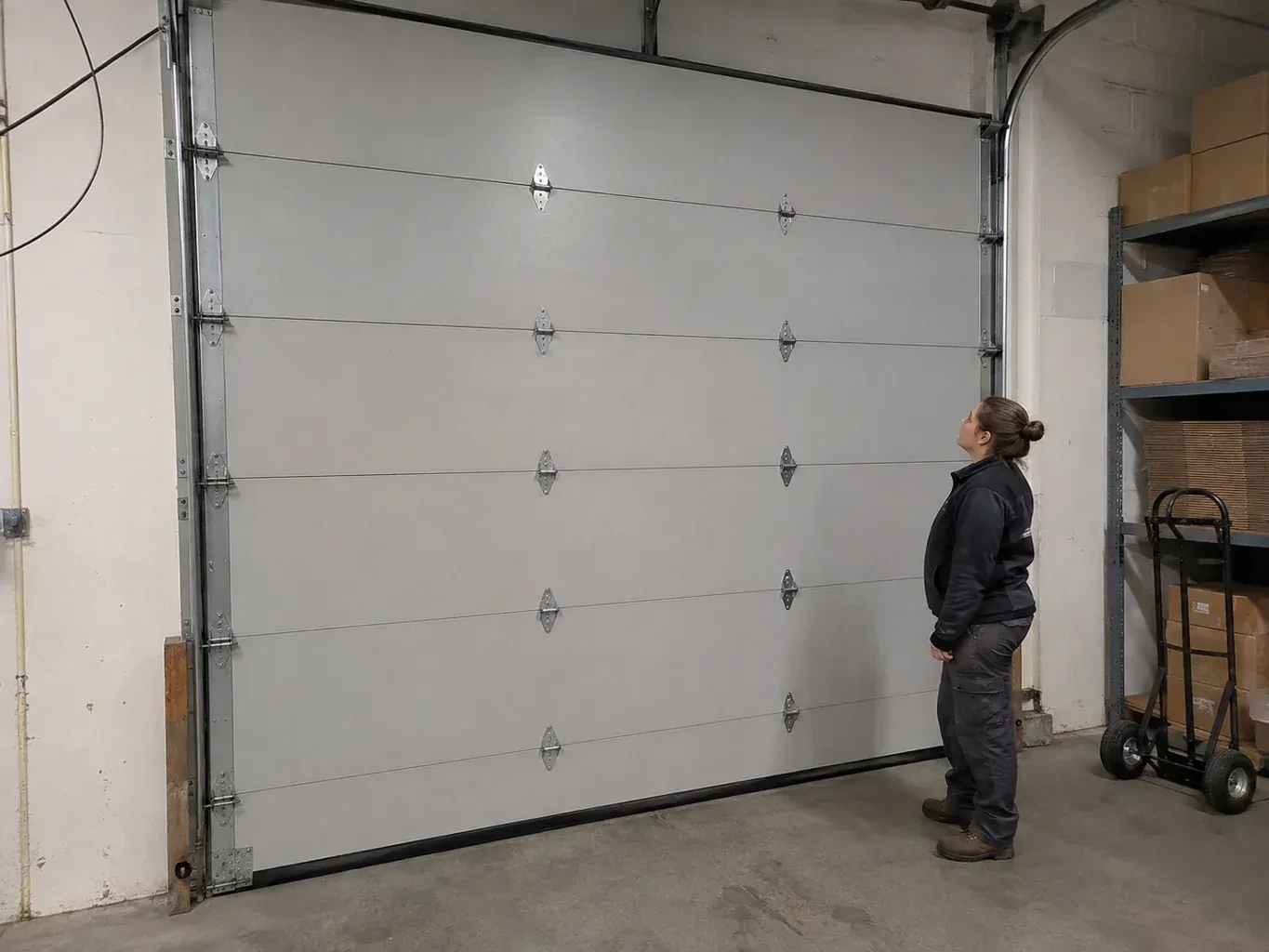
A door that leaks air or admits slush is examined in its fully seated position. The technician compares the bottom edge with the floor, checks compression along the seal and looks for a bent retainer or distorted lower section. Side and header weatherstrip contact is observed without forcing the sections against the jambs. Light gaps can also reveal a door that is out of level or a track set too far from the opening. The assessment connects seal condition with landing position so the repair improves fit without creating binding during travel.
Renewing hinges and rollers
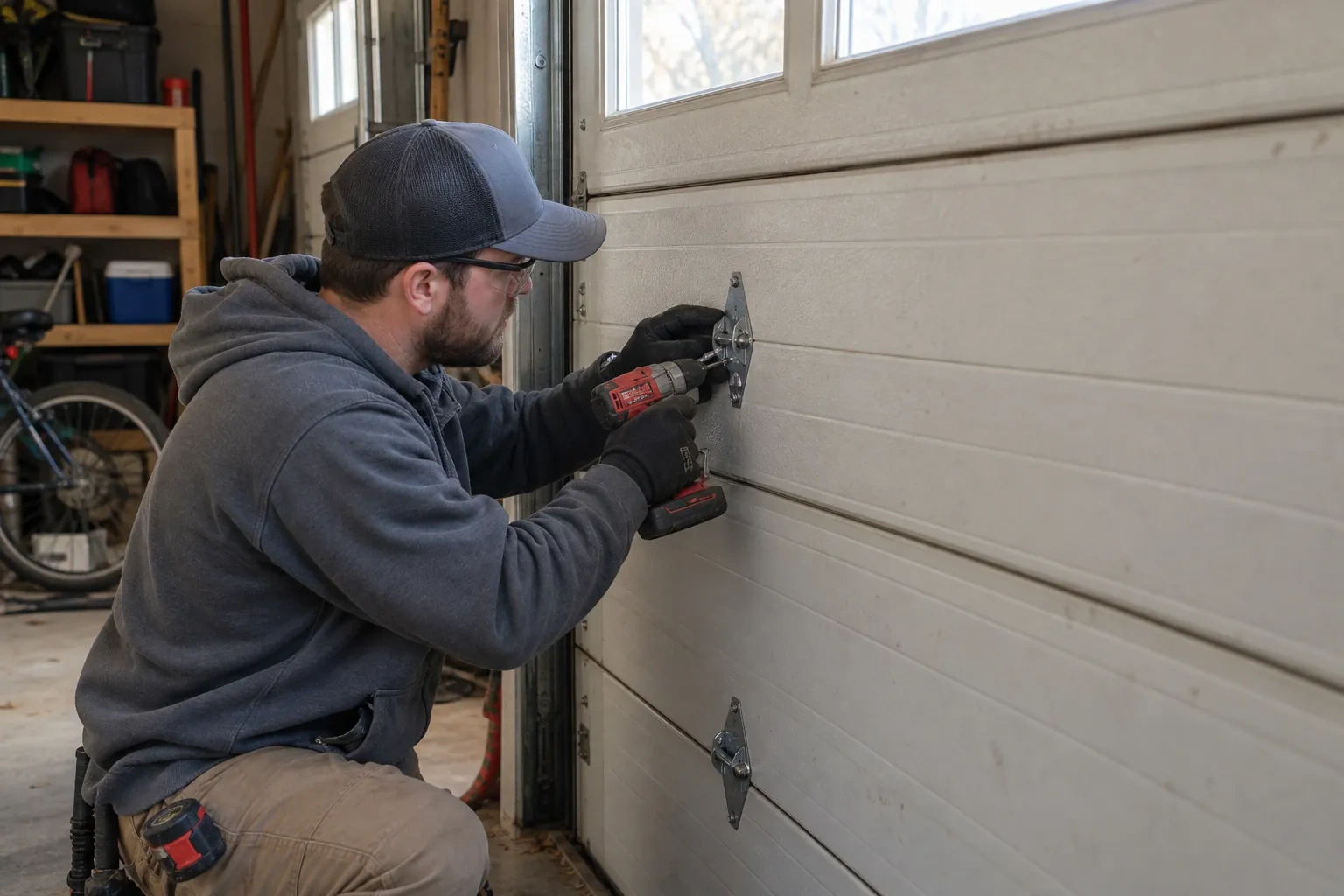
Worn running hardware is replaced in its correct sequence rather than mixed between positions. Numbered end hinges maintain the changing roller offset that guides stacked sections around the track curve, while centre hinges keep adjoining panels connected across the width. Roller stem length, diameter and bearing type are matched to the track and door duty. Each mounting area is checked for enlarged holes or cracked stile material before new fasteners are installed. With side play reduced and alignment restored, the sections articulate smoothly instead of knocking or twisting through the bend.
Useful documentation for a busy facility
The finished record ties the complaint to the actual repair: door identification, parts changed, settings adjusted and functions tested. For properties with many similar openings, assigning a clear asset number to each door prevents service histories from becoming mixed. Cycle demand, collisions and recurring observations can then be logged against the correct bay. This information supports practical maintenance planning and helps the next technician arrive with relevant dimensions and system details, while staff retain a concise reference for normal sound, travel and control behaviour.
Commercial Sectional Door Repair
In the van
Commercial door sections
Lift cables and drums
Bottom fixtures
Commercial rollers
Track brackets and back hangs
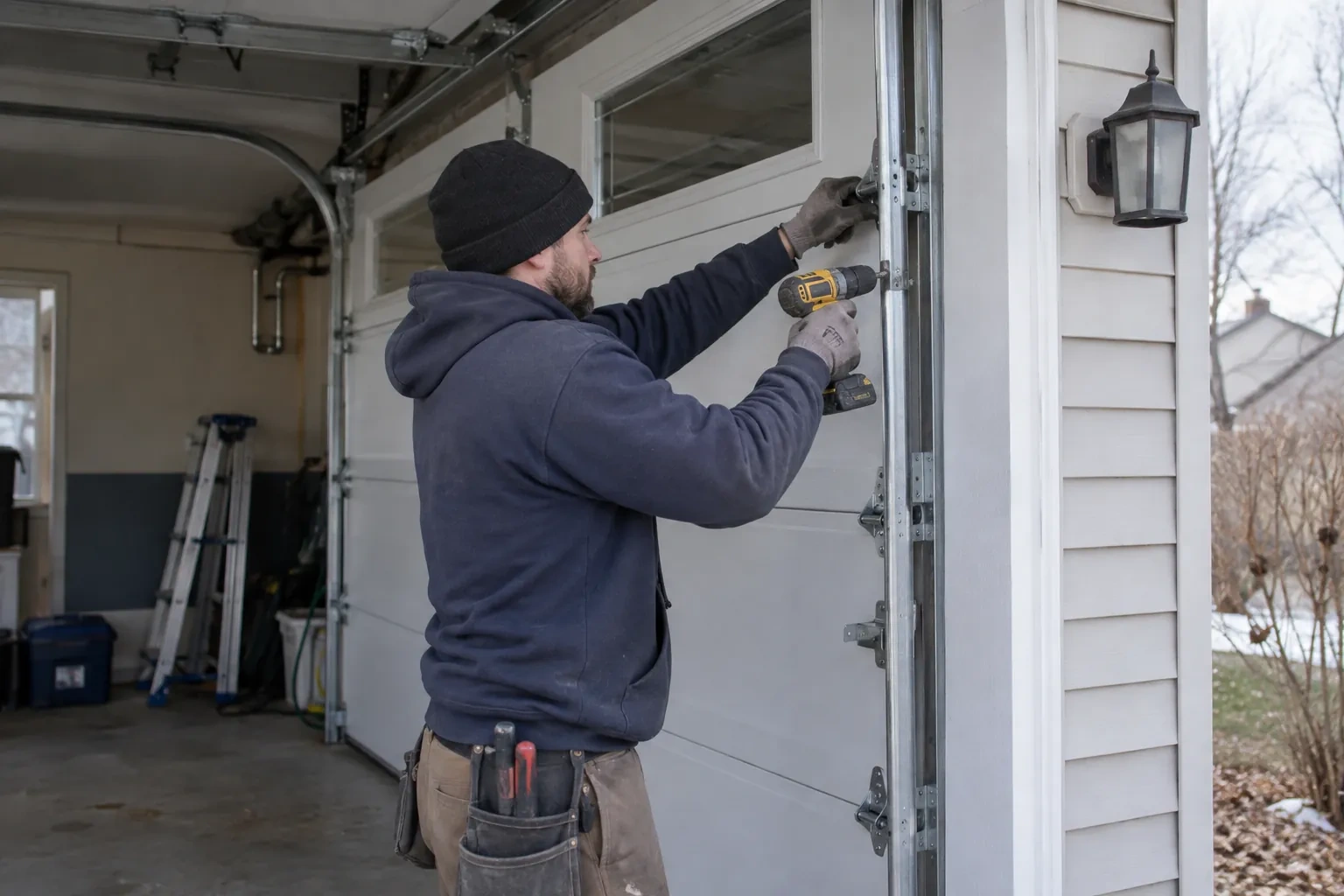
Commercial Sectional Door Repair
What affects the quote
Roller and hinge wear
One failed roller is a smaller scope than widespread bearing play, loose numbered hinges or damaged mounting holes across several door sections.
Operator repair requirements
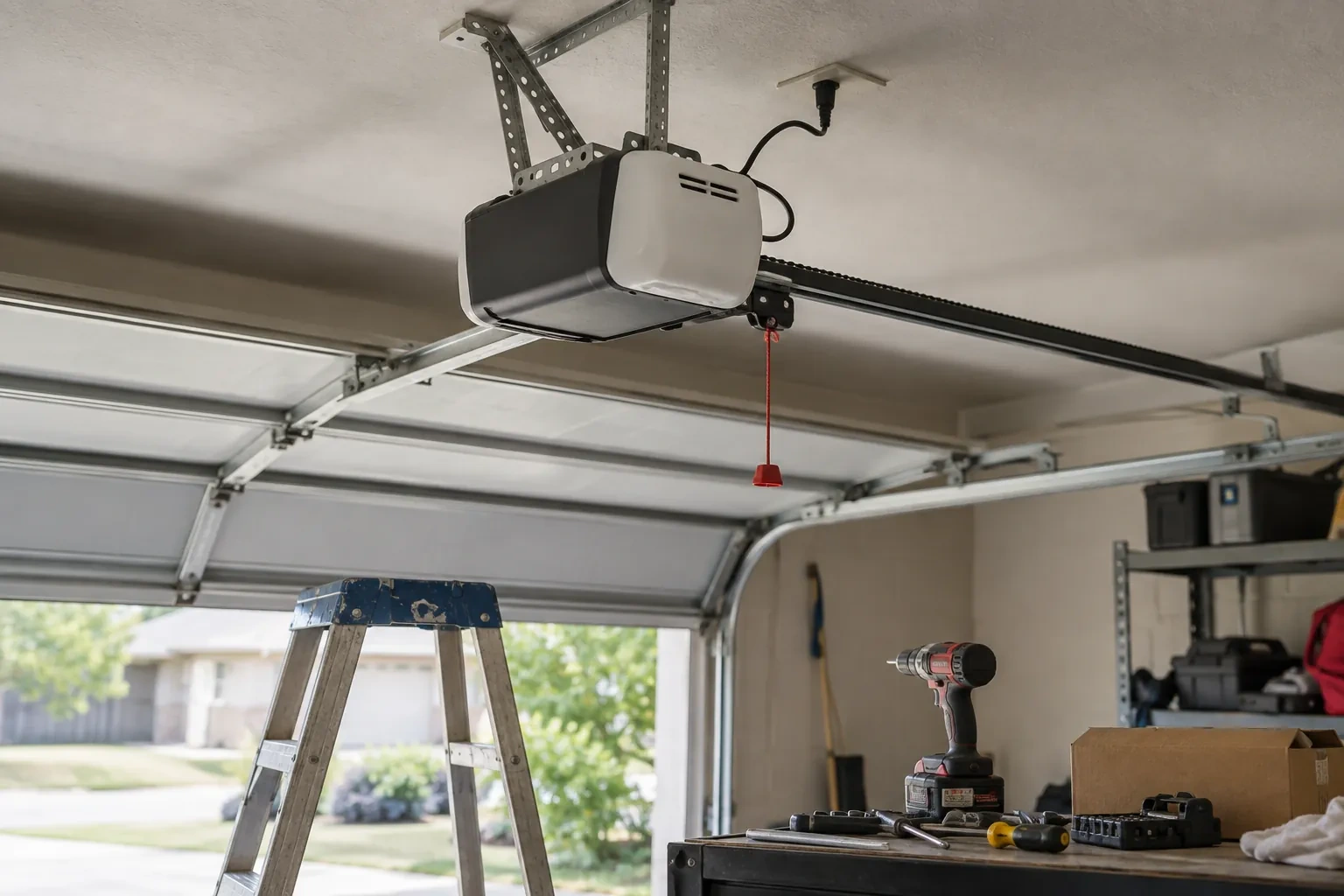
Drive chains, sprockets, shaft couplings, hoists, brakes, clutches, limits and control wiring each add distinct mechanical or electrical tasks to the quote.
Weather-seal work
Bottom rubber alone is different from a bent retainer, uneven landing, damaged perimeter seal or drainage issue that also needs correction at the opening.
What to have ready
- Where during travel does the sound or hesitation occur?
- Is the door closed, open or stopped between positions?
- Do you have the model, serial number and service record?
Commercial Sectional Door Repair: questions
QuestionsWhat causes a commercial sectional door to become noisy?
Common sources include roller-bearing wear, loose hinges, dry pivots, a rubbing panel, track movement, shaft-bearing wear and operator-chain vibration. The point in the cycle where the sound occurs helps isolate it. A technician watches and listens during controlled travel, looks for play or contact marks, and services the component creating the repeatable noise.
Does a torn bottom seal always mean a seal-only repair?
Not always. The rubber may simply be worn, but a bent retainer, uneven floor, crooked door or impact-damaged bottom section can produce the same gap. The technician checks how the door lands before replacing material. Correcting level or retainer shape first allows the new seal to contact evenly without being stretched to compensate for another fault.
Can corrosion on lower hardware be repaired?
Surface condition and remaining material determine the scope. Light contamination may be cleaned during maintenance, while pitted cables, weakened brackets, seized rollers or compromised fasteners are replaced with compatible components. The source of moisture is considered too. Clearing drainage, renewing seals and removing accumulated salt help protect the repaired lower section and its hardware.
Related services
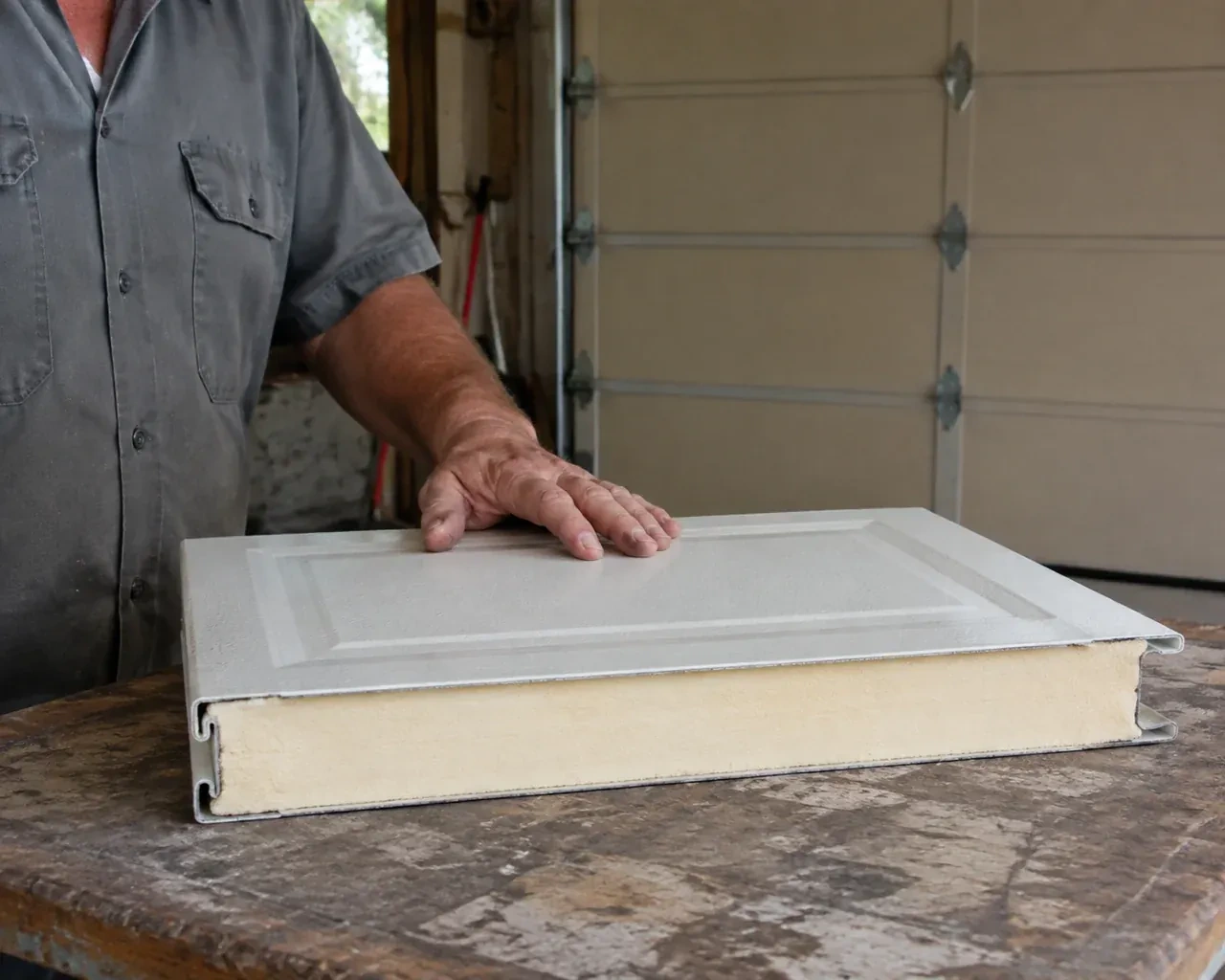
- Insulated Steel Garage Door InstallationDaylight appears beside the closed door and powdery snow collects just inside after windy weather.
- Wind-Rated Garage Door ReplacementNew windows would improve the door's appearance, but they also change the section layout and reinforcement pattern.
- Carriage-House Garage Door InstallationCold air is noticeable around the current door, especially near the floor and section joints.