Springs · Brampton
Garage Door Track Repair or Replacement
The garage floor has settled at one corner, and the door now scrapes the concrete on that side while daylight shows at the other.
In plain words
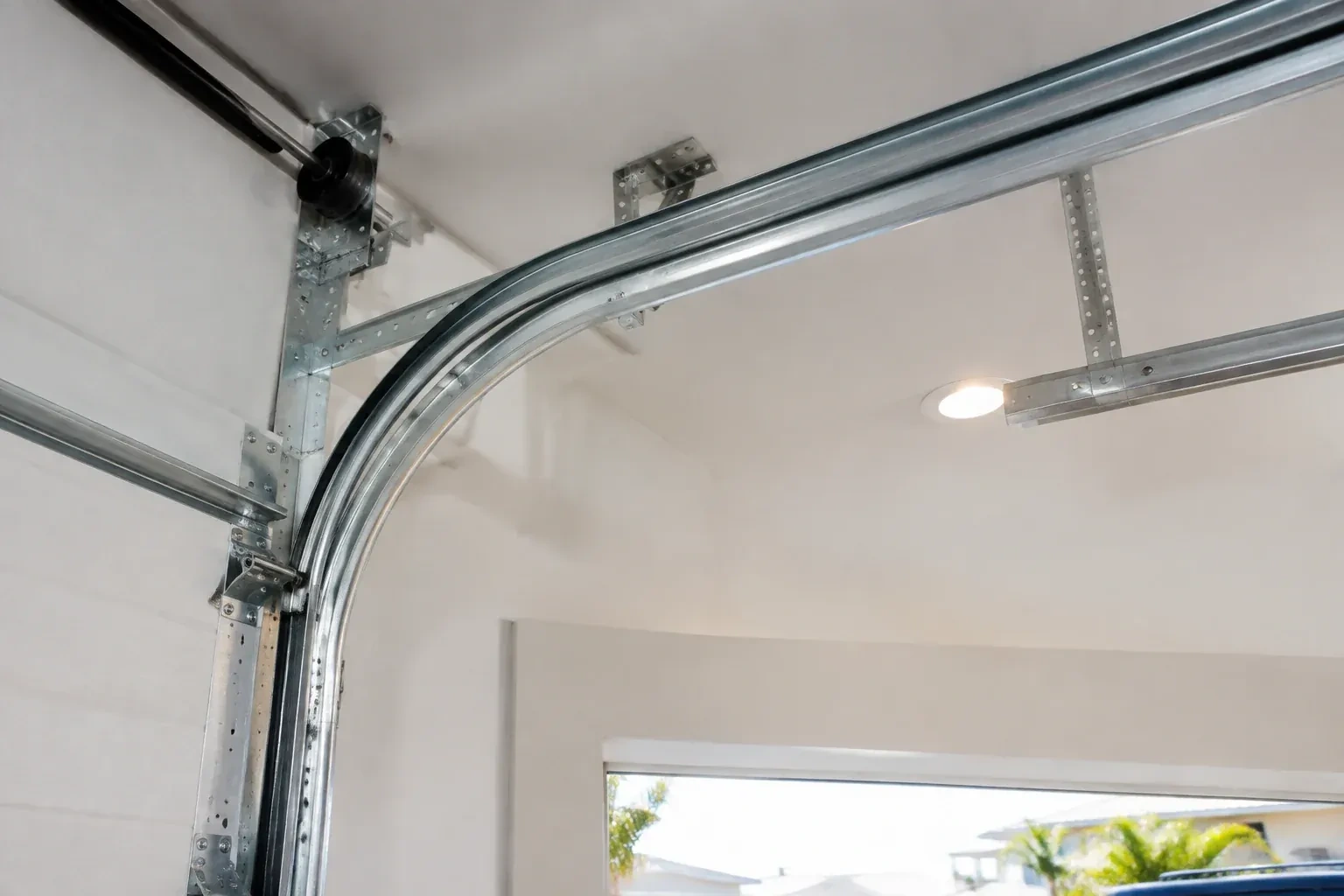
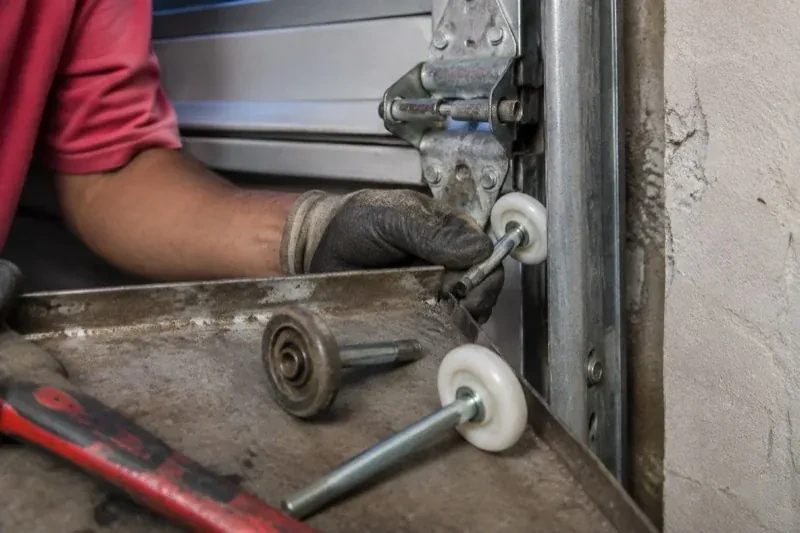
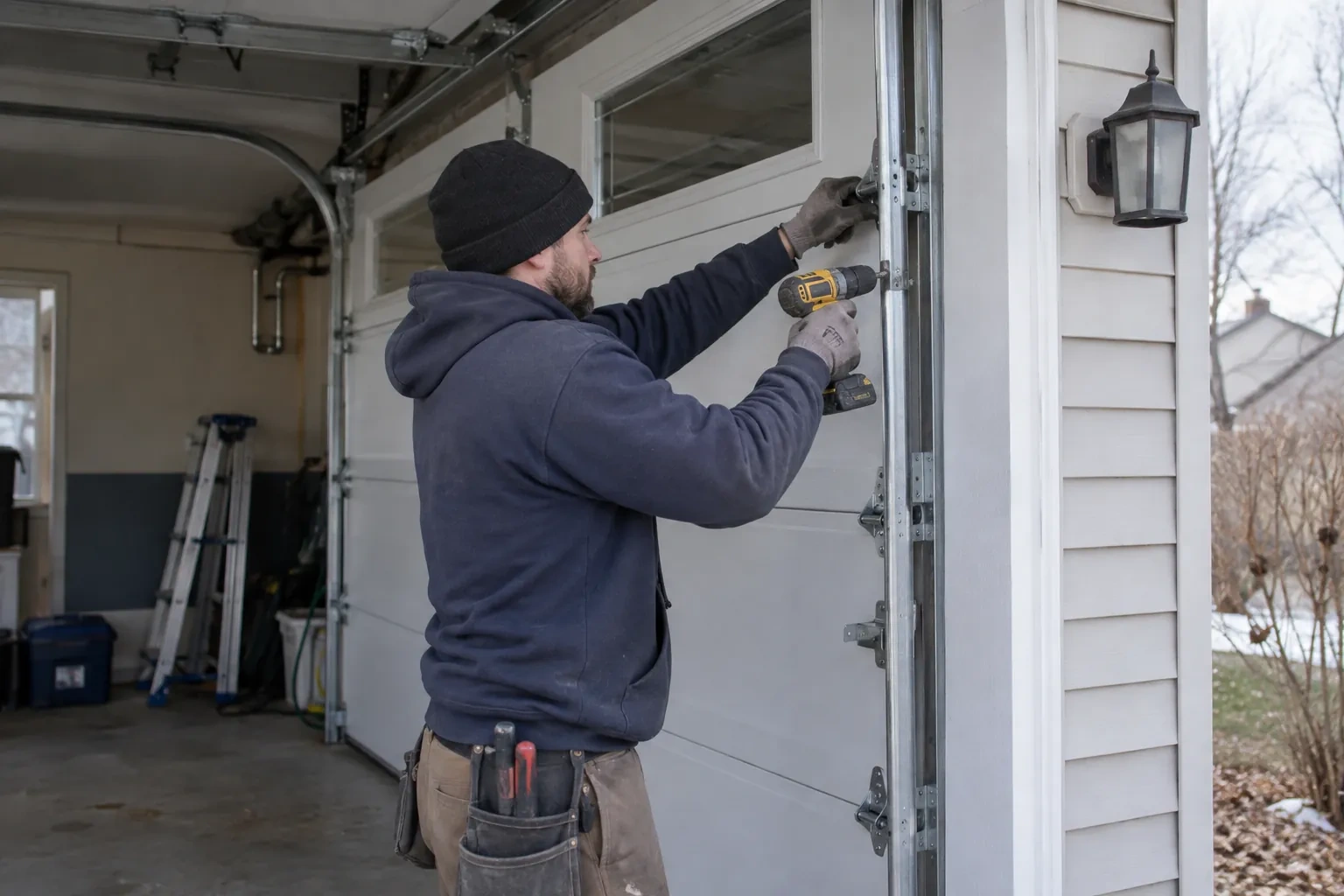
A track visit follows a set order. The opener is disconnected and the door clamped so it cannot move while hardware is loose. Then the whole path is checked: plumb and spacing of each vertical run, the state of the jamb wood and lag screws, the curve, the level of the horizontal run and the hangers holding it, and each roller's seat in the channel. Damaged pieces are dressed or replaced, brackets and hangers are refixed into solid framing, and the two sides are set square to each other. Rollers are reseated, spring tension is returned, and the door is run by hand, balanced, and the opener tested.
How the visit goesThe door climbs crooked, one side clearly ahead of the other. Nothing looks broken, but the two tracks sit different distances from the door, and one leans in toward the opening near the top.
Garage Door Track Repair or Replacement
How the visit goes
Jamb brackets, lag screws and the wood behind them
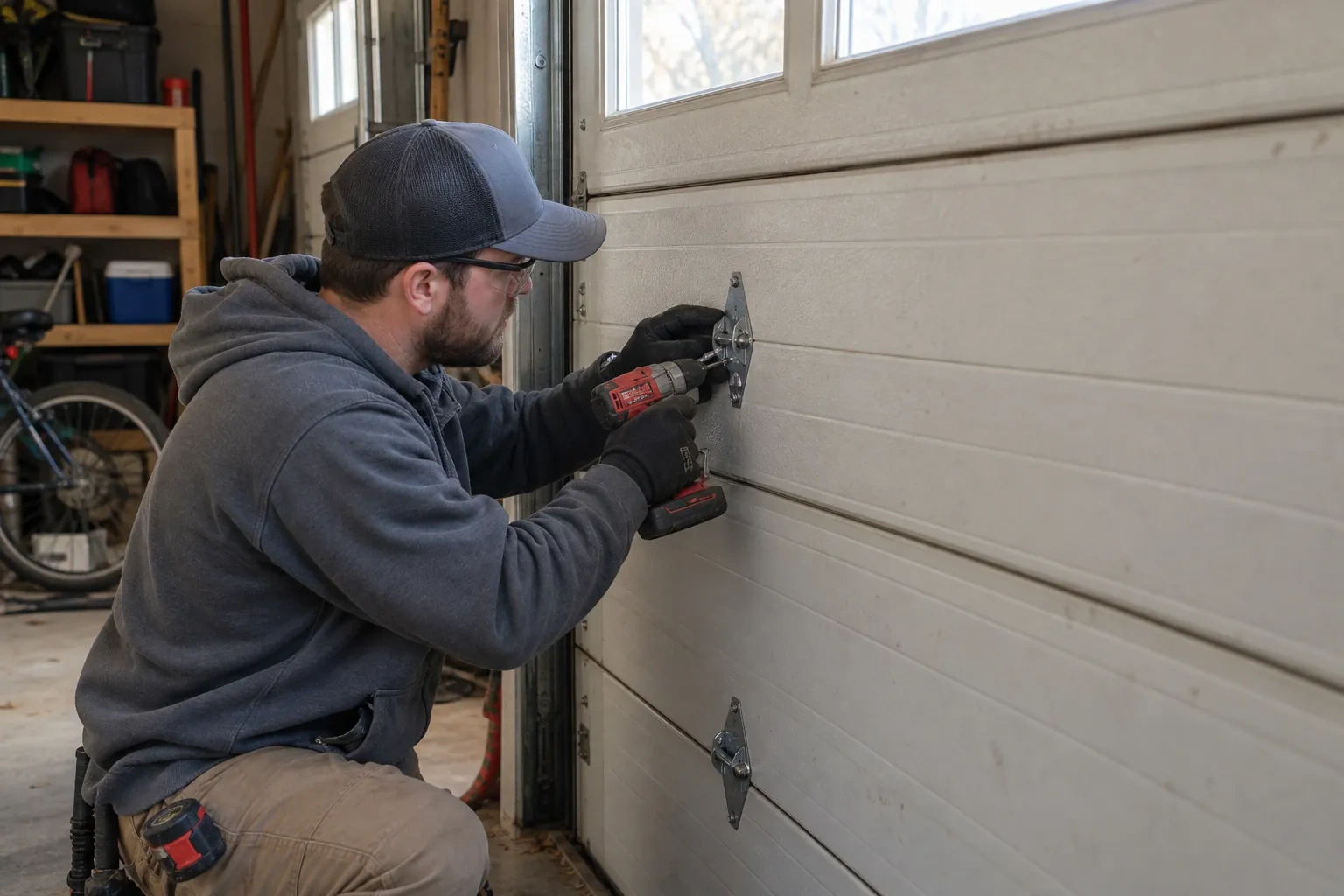
Every fixing along the vertical track is tested by hand and by eye. Jamb brackets that rock, lag screws that turn without tightening, and a continuous angle standing off the wood all mean the track has been free to move. The technician then looks at the jamb itself, probing the bottom foot for softness where splash and salt have soaked in, and checking for splits around the screw holes. In an older garage the wood is often the real fault, and no amount of tightening holds a screw in punky timber. Where that is the case, sistering or replacing the lower jamb goes onto the plan alongside the track.
Tension back, balance and opener tests
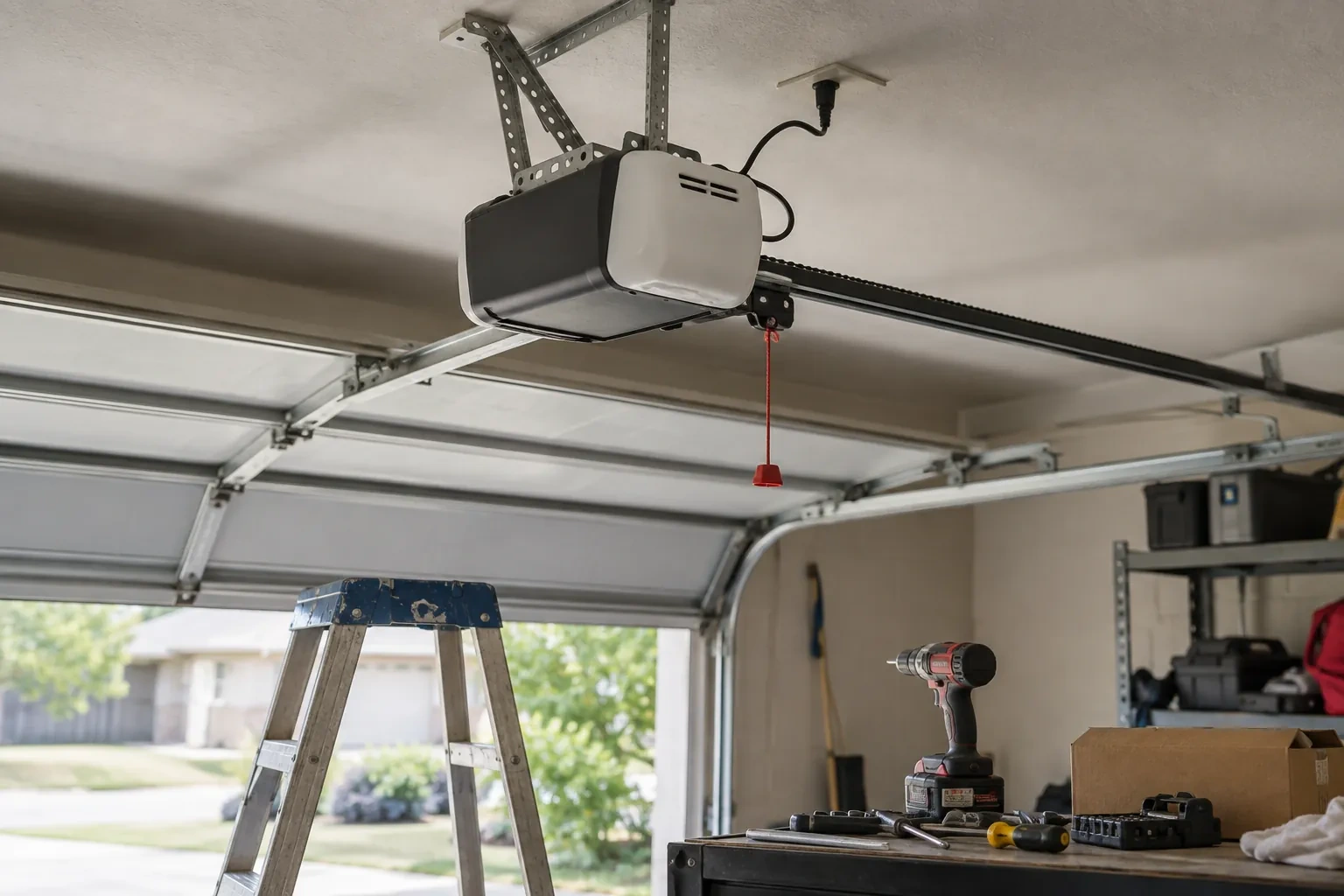
Once the track is fixed and every roller is seated, the springs are wound back to the turns the door calls for and the clamps come off. The technician lifts the door by hand through its full travel, watching each roller through the curve and along the horizontal run for any catch, and checks that the door holds itself at roughly waist height. It is run up and down several times by hand before the opener is reconnected, and the opener's travel limits and force settings are then adjusted to the newly aligned door, with the reversing test done against a block on the floor. You watch the finished door make the trip before the tools are packed.
Signs worth a call before the door jams
A well-set track stays that way, but doors live busy lives, and a few early signals mean an easy adjustment instead of a stuck door. A new rub mark on the weatherstrip, a roller that squeaks at the same point each trip, a door that starts to lean or that closes with a gap at one corner, a bracket with a shadow behind it, or a horizontal run that looks a shade lower than its partner: any of these is the track beginning to move. Mention what you saw and where, and the technician can usually put it right in a short visit. Catching it early also spares the rollers and hinges the wear a misaligned track hands them.
Garage Door Track Repair or Replacement
In the van
Track pliers and dead-blow hammer
Level, plumb line and square
Top fixtures
Horizontal track with curve
Replacement rollers and hinges
Garage Door Track Repair or Replacement
What affects the quote
Door size and weight
A tall or double door has longer runs of track and heavier loads on the brackets, and a heavy insulated or wood door may call for heavier-gauge track and more substantial hangers.
Opener adjustment afterwards
A door running on a freshly aligned track often needs the opener's travel limits and force reset and its reversing tested. That short adjustment is named when it is needed.
Which part of the run
A vertical section below the curve is the simplest change. The curve itself, or the horizontal run overhead, involves the flag bracket and hangers and takes longer to set.
What to have ready
- Has any roller come out of the channel?
- Is the wood beside the door soft, split or discoloured at the floor?
- Where is the damage: near the floor, at the curve, or on the overhead run?
Garage Door Track Repair or Replacement: questions
QuestionsHow is the vertical track attached to the wall?
Two ways are common. Bracket-mounted track uses several L-shaped jamb brackets, each lag-screwed into the wood jamb, which lets the track be adjusted a little at each bracket. Angle-mounted track bolts to a full-height continuous angle, often chosen where sideroom is tight. In both cases the fasteners bite into the jamb, so the condition of that wood matters as much as the track itself.
The wood behind the track is rotten. Can the track still be fixed?
Yes, and the wood is part of the job. Screws will not hold in soft timber, so the technician cuts back to solid wood and sisters a new length of jamb alongside or replaces the lower section, fastening it through to the framing. The brackets are then lag-screwed into the fresh wood and the track set to the door. In older garages this repair is common, and it is what makes the alignment last.
Should the track be lubricated?
It depends on the door, and manufacturers disagree, which surprises many people. Some want the track kept clean and dry, since lubricant there can collect grit and let the wheels skid instead of roll, wearing the roller and the track edge; others specify lubricant at the track bend. The moving parts, roller bearings, hinge pins and springs, get their own lubricant either way, in the type the manual specifies, with a few cycles of the door to spread it.
Related services
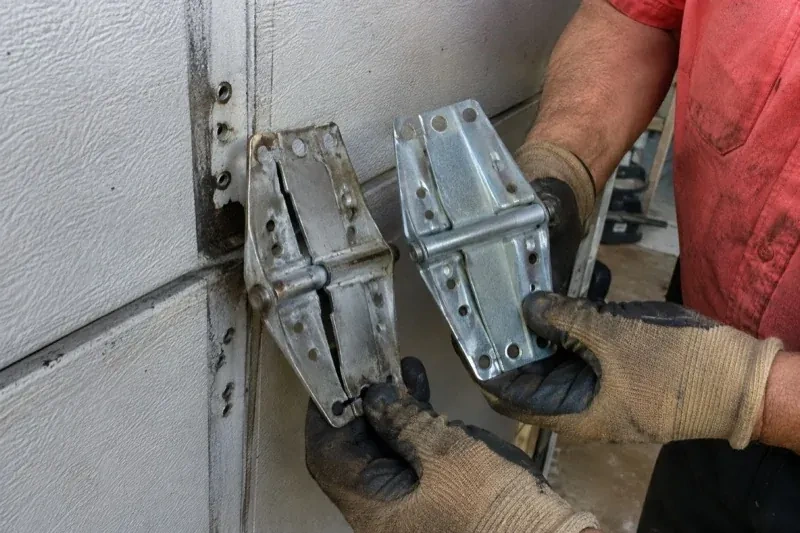
- Garage Door Hinge ReplacementPressing a hand against one of the middle hinges makes it rock on the panel.
- Garage Door Cable ReplacementAfter years of slushy winters the cables look thinner near the bottom brackets, with rust streaks running down the door where they attach.
- Torsion Spring ReplacementOne side of the door sits higher than the other in the tracks, and a lift cable is hanging slack or has jumped off its drum.