Openers · Brampton
Garage Door Opener Replacement
During the ice storm the power was off for two days.
In plain words
How do you tell whether an opener has reached its end or simply needs a part? A snapped gear or a worn trolley on an otherwise sound, recent unit is a repair. Replacement makes sense when the operator predates photo-eye sensors, when the board or motor has failed and is no longer made, when the same fault keeps returning, when the door has become heavier, or when you want features it was never built for, such as battery backup or phone control. The technician lays both paths side by side so the choice is yours, and a new operator brings the door up to today's safety standard.
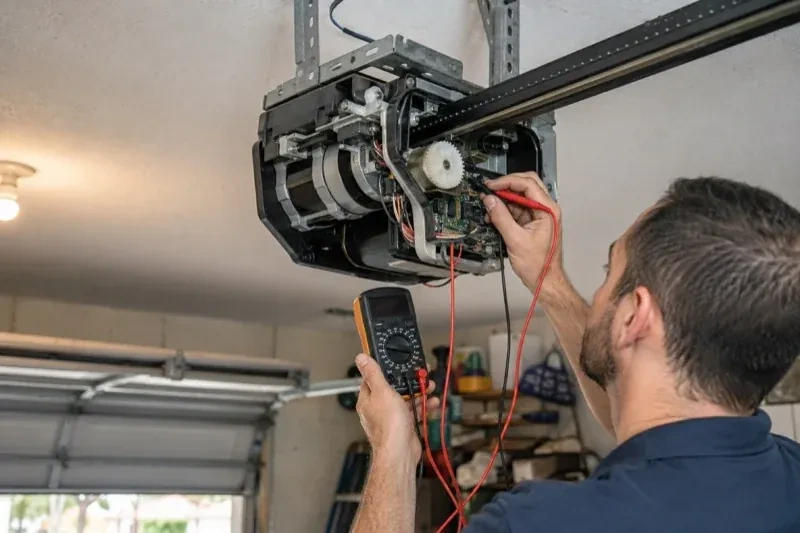
How the visit goesSince the storm the door behaves oddly: it reverses halfway down for no reason, the light flickers, and the travel limits drift so it either slams or stops short. The board inside is discontinued and the last repair only bought a few months.
Garage Door Opener Replacement
How the visit goes
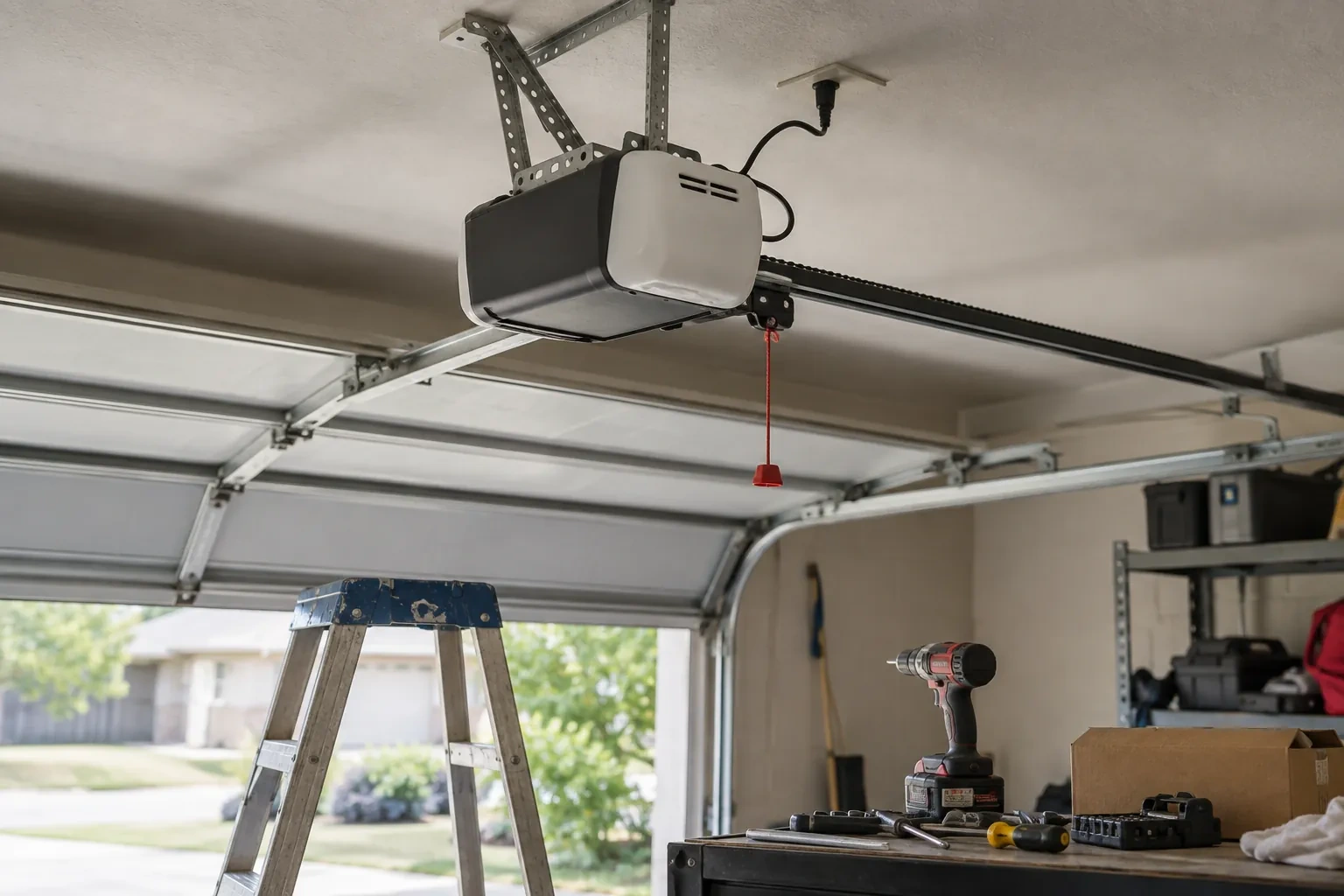
Headroom, framing and where the rail will hang
Looking up tells the technician how the new opener will fit. The gap between the top of the open door and the ceiling decides whether a standard rail has room or a low-headroom arrangement or a wall-mount operator is the better fit. The wall above the door is checked for solid framing to take the header bracket, and the ceiling for joists or trusses to carry the angle iron that hangs the head. Door height matters too: a 7 ft door takes a standard rail while an 8 ft door needs an extension. Storage racks, lights and ducts in the path of the rail are noted so nothing gets in the way on the day.
Connecting the door to the drive
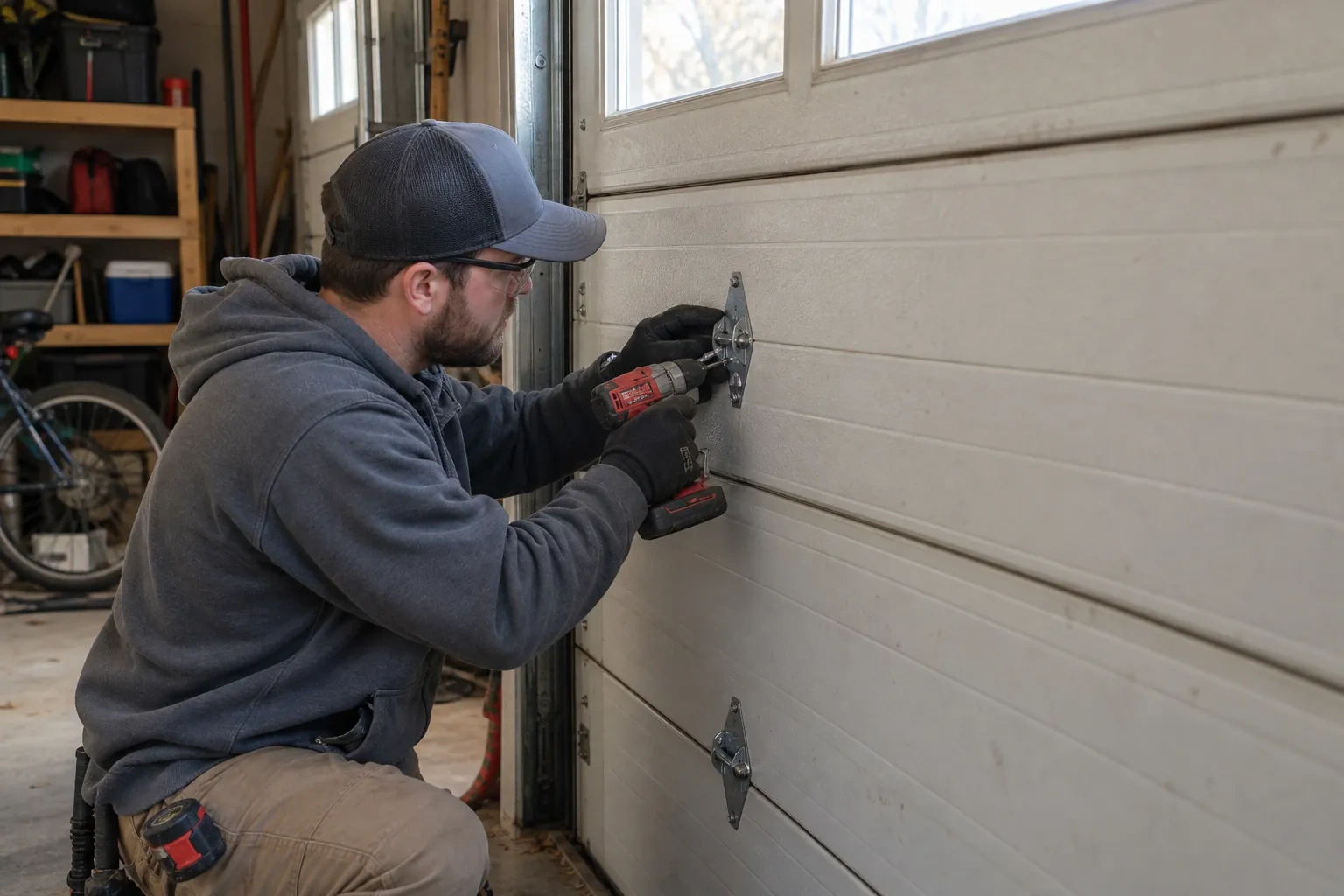
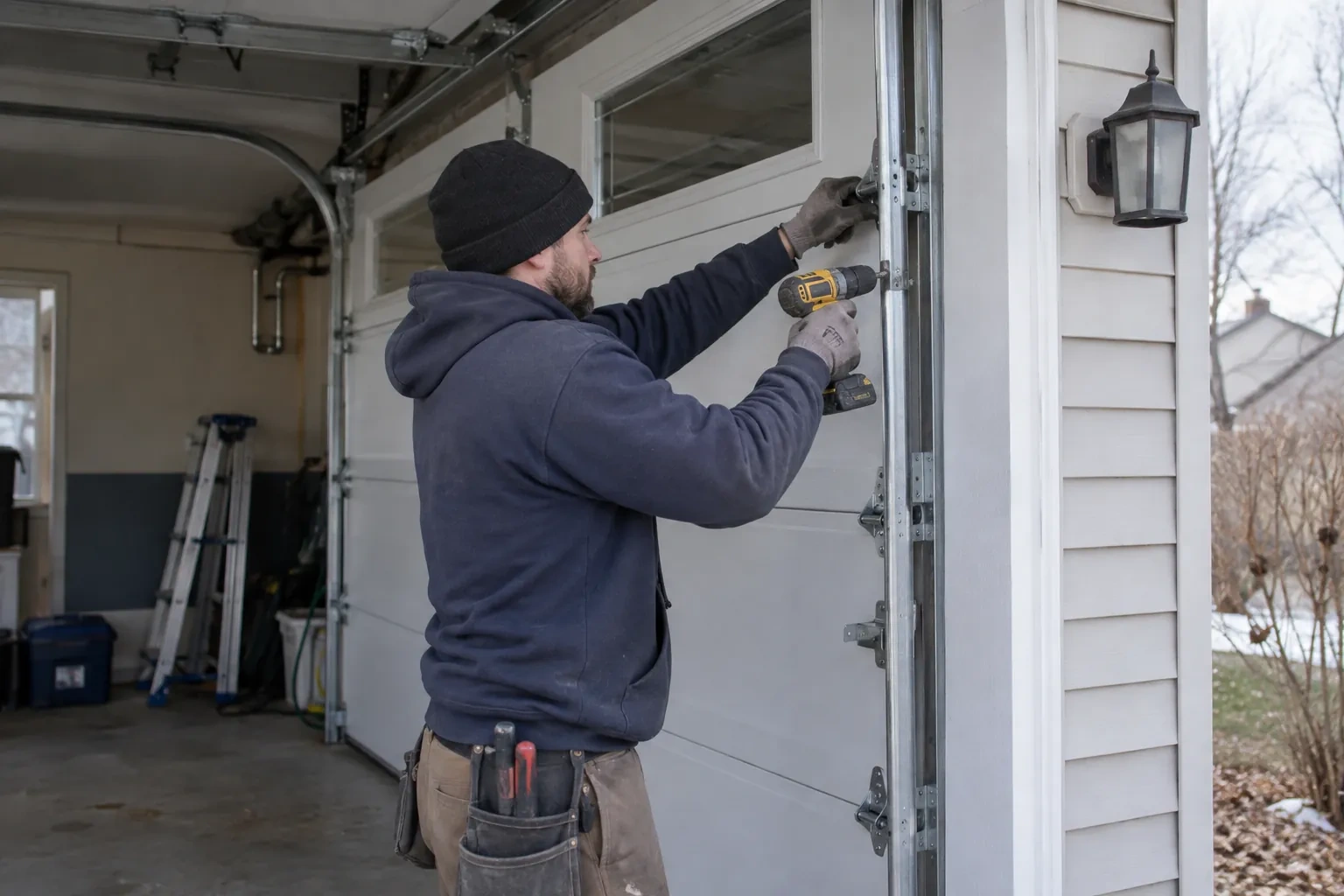
Where the door needs it, a reinforcement strut or operator bracket is fitted across the top section so the pull of the arm is spread over the whole width rather than one point. The door bracket is fastened through the strut into the section, and the straight and curved arm pieces are joined at the length that gives the trolley a smooth angle of pull. The technician reconnects the trolley, runs the door partway by hand and watches the arm geometry through the top of the travel, since a poorly angled arm is a common cause of a door that shudders or bows at the top.
Ceiling space and light you did not have before
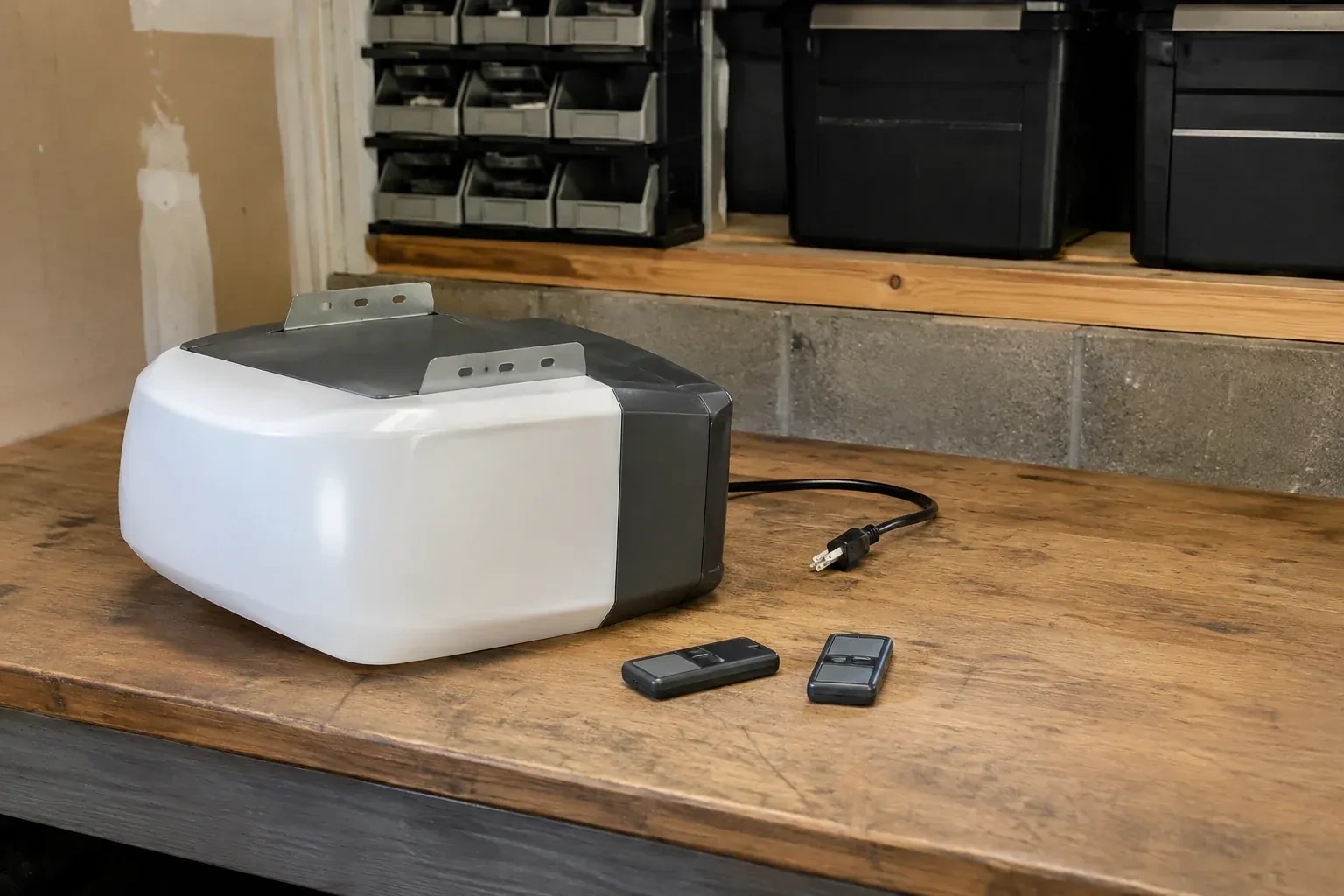
A wall-mount operator hands the whole ceiling back: no rail, no motor box, just the small unit next to the spring shaft. Racks, a loft or a vehicle lift can go where the old opener hung, and the door itself runs quietly because nothing above it is shaking. Any new operator also brings better light, usually LED lamps that come on when the door moves or when a motion sensor sees you walk in, and switch off on a timer. If you notice remote range shrinking after fitting your own LED bulbs, swap them for the type the operator's maker lists, since some bulbs interfere with the radio signal.
Garage Door Opener Replacement
In the van
Perforated angle iron hangers
Header bracket and lag screws
Remotes and wireless keypad
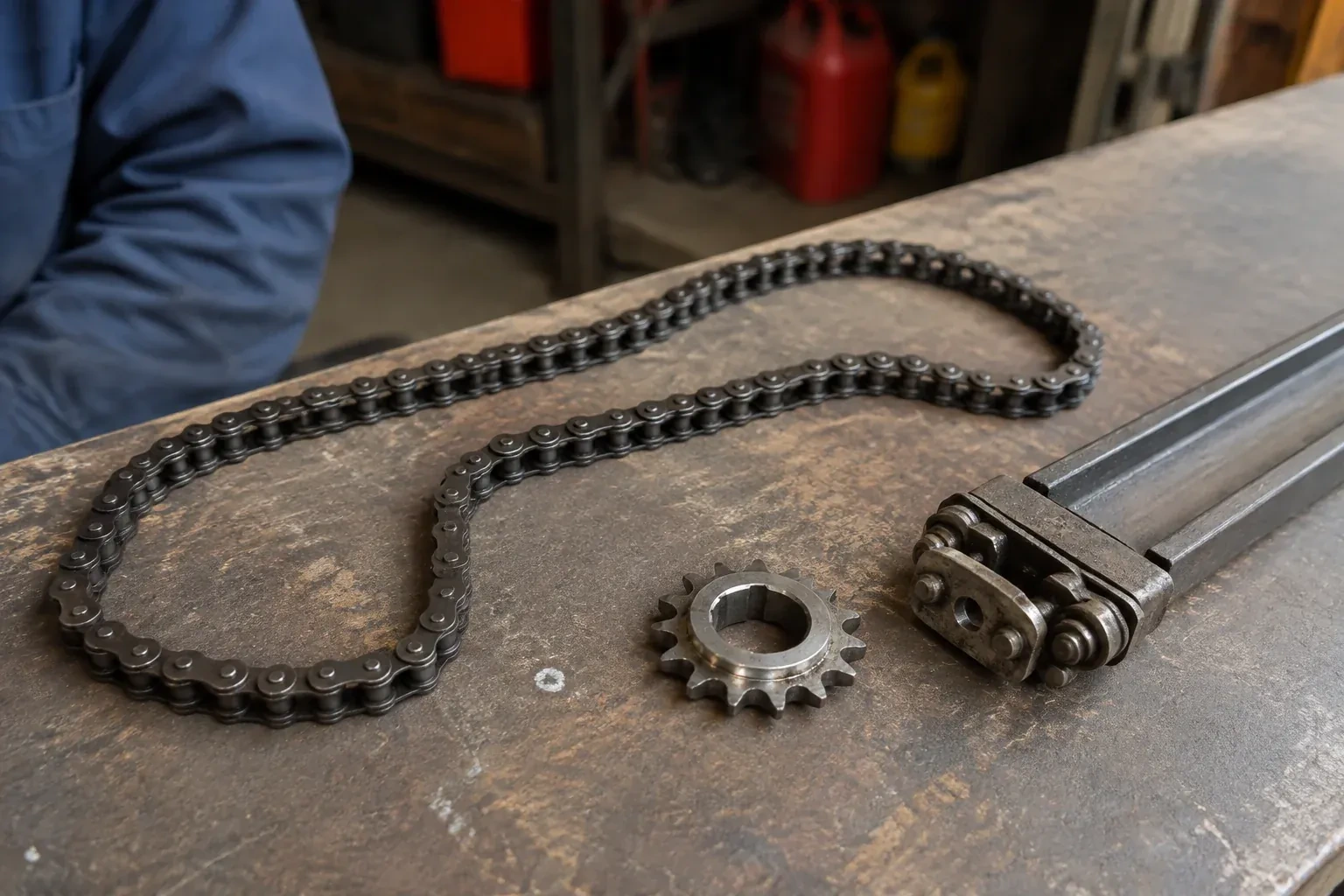
Door arm and door bracket
Low-voltage bell wire and staples
Garage Door Opener Replacement
What affects the quote
Power at the head unit
If a grounded receptacle is already close to the operator, nothing is added. If one must be installed or moved, that electrical work is quoted separately by an electrical contractor.
Detached or unheated garage
An operator rated for deep cold, a cold-rated lubricant and sometimes a heavier battery are chosen for a garage that sees winter temperatures, and those choices show in the equipment list.
Motor rating for the door
An uninsulated single steel door and a heavy double door in insulated steel or solid wood call for different motor ratings, and the heavier door's operator is a larger piece of equipment.
What to have ready
- Is the garage attached and heated, or detached and unheated?
- Is there a bedroom or living space above or beside the garage?
- How much room is there between the top of the open door and the ceiling?
Garage Door Opener Replacement: questions
QuestionsWhat is the red cord for?
It is the manual release. A tug on the red handle unhooks the trolley from the door arm so the door can be raised and lowered by hand while the power is off or the operator is being serviced. It hangs high enough to clear a vehicle roof but low enough to reach without a ladder. To reconnect, most units need only be run once and the trolley picks the arm back up; a few take a second tug.
Will a new opener make the door quieter?
A belt or direct drive with a soft-start DC motor removes most of the operator's own noise, and a level, well-tensioned rail removes the rattle. The door contributes its own sound through rollers, hinges and springs, so the technician looks those over during the balance check and can fit nylon rollers or fresh hinges at the same time. Together the two changes turn a morning rumble into a hum.
The door is frozen to the floor. Why does the opener reverse?
Because the operator is protecting the door. Its force setting is tuned to the small effort a balanced door needs, so a seal glued to the concrete by ice registers as an obstruction and the door heads back up rather than ripping the rubber or bowing the top panel. Loosen the seal with a plastic scraper or a hair dryer along the sill, then try again; a shovelled threshold before a cold night keeps it from recurring.