Springs · Bramalea
Extension Spring Replacement in Bramalea
It is the first hard frost of the year and the door on the old detached garage has stopped halfway, squealing at one pulley.
In plain words
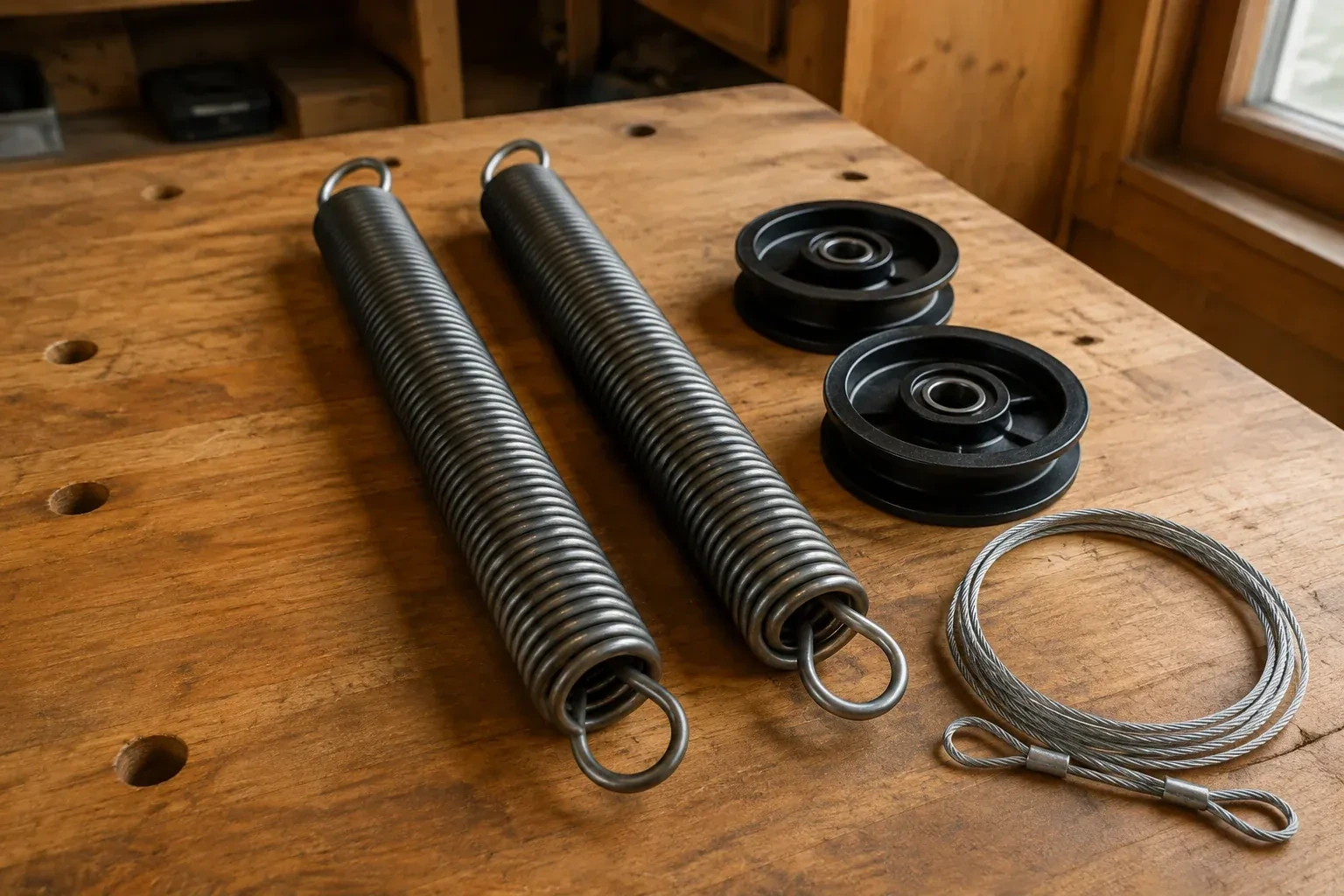
Choosing the right spring is a matter of weight, not colour. Extension springs are rated for the weight they are meant to lift, and the correct pair for your door is found by weighing the door itself with the opener released, then checking that figure against the wire size, coil diameter and length of the old springs. Paint colour on the end coil is only a hint; older springs fade, get overpainted or were never quite right to begin with. A pair matched to the measured weight gives a door that holds at half height and lifts with one hand, and an opener that works lightly.
How the visit goesYou pulled the red cord to open the door during a power cut and it barely moved. Lifting it took your whole weight, and when you let go it came down hard. It used to float up with one hand.
Extension Spring Replacement
How the visit goes
The rest of the door, and why the spring went
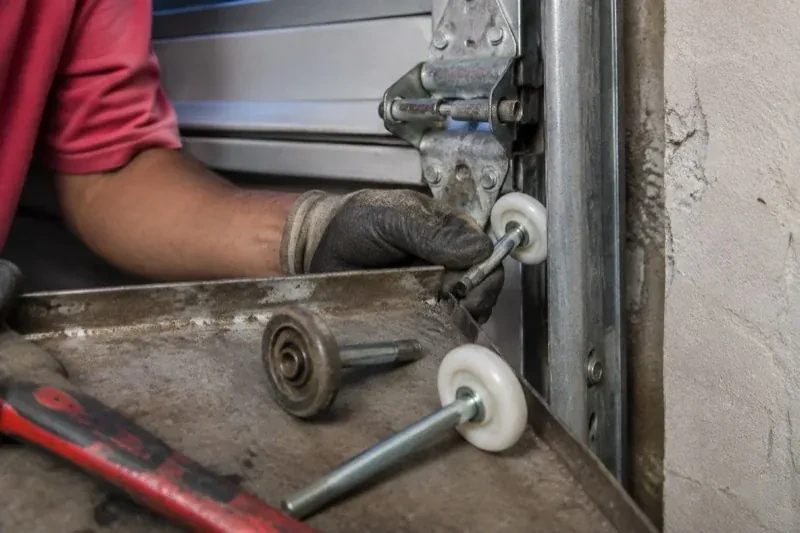
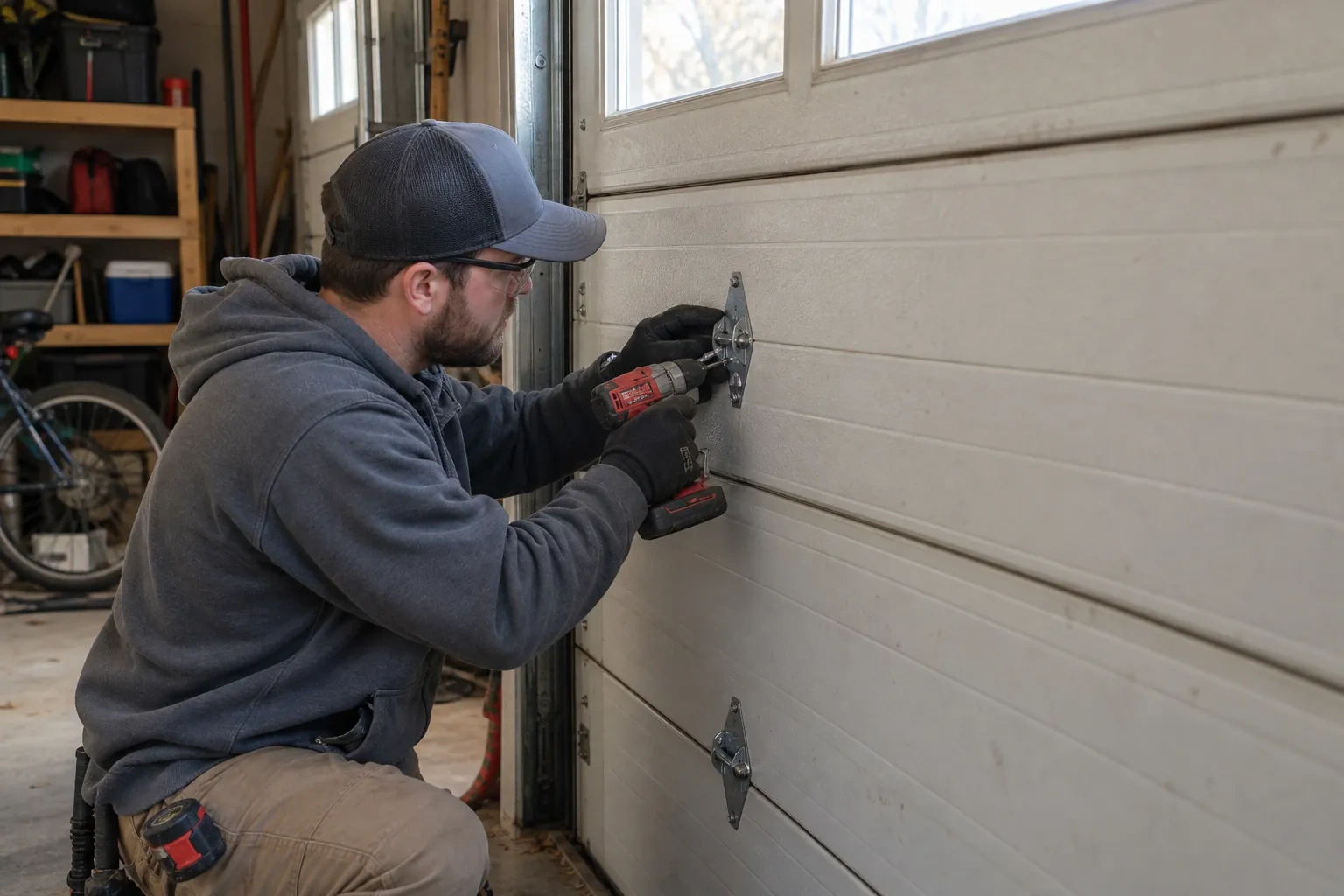
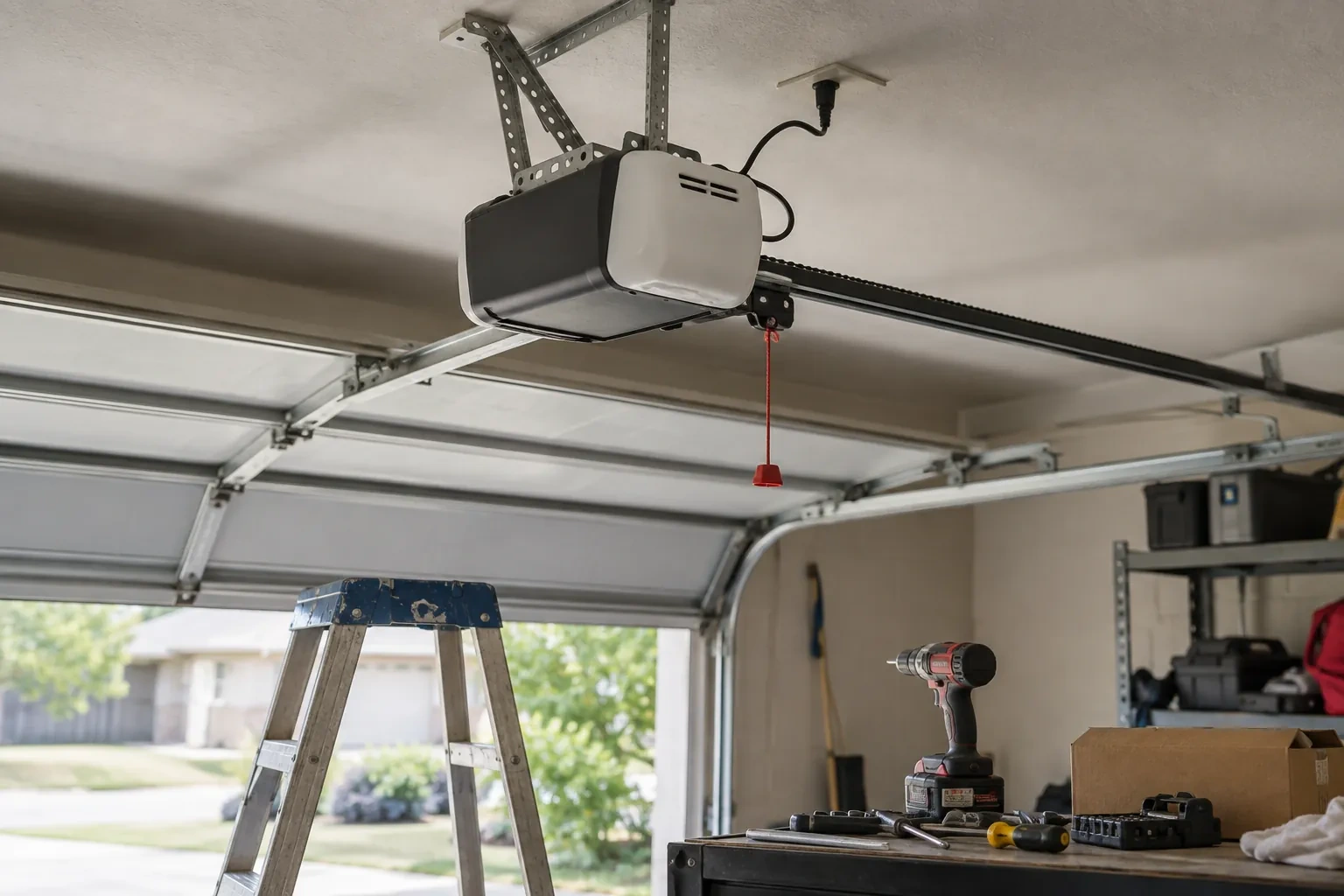
A spring rarely fails on its own, so the first look ends with the door it was lifting. The technician checks the rollers for cracked wheels and bent stems, the hinges for splits, the track for a bend or a bracket pulled off the jamb, and the bottom section for a dent that catches. The opener's force setting is noted, since an opener turned up to compensate for tired springs will overpower the new ones. And the history matters: a door recently fitted with insulation panels or windows weighs more than the springs were chosen for, and a door that has been closed onto snow or a bin has had its cables jolted.
Balancing the door by hand
Balance is judged with the opener still disconnected. The technician lowers the door to the floor, then lifts it: it should rise with modest effort, stay put when let go at about waist height, sit steady when fully open, and come down under control rather than dropping. If it sinks, both springs need a little more stretch and each S-hook is moved one hole to take up cable; if it climbs on its own, one hole the other way. Adjustments are always made in pairs, with the door open and clamped again each time, so the two springs stay equal. Two or three rounds usually settle it.
The numbers that stay with the door
Before leaving, the technician tells you what the door weighed, which spring rating and length went on, whether the pulleys and cables were renewed, and which hook position the cables were set to. Write it on a card by the opener or inside the door's manual. Extension springs are sold by rating and length, so the next set can be ordered from that card without weighing the door again, and a technician arriving later can see at a glance whether the door has been altered since. Add the date and roughly how many times a day the door is used; together those two facts give a fair idea of when the springs will be due again.
Extension Spring Replacement
In the van
Replacement rollers and hinges
Containment (safety) cables
Lift cables
Track clamps or locking pliers
Garage-door spray lubricant
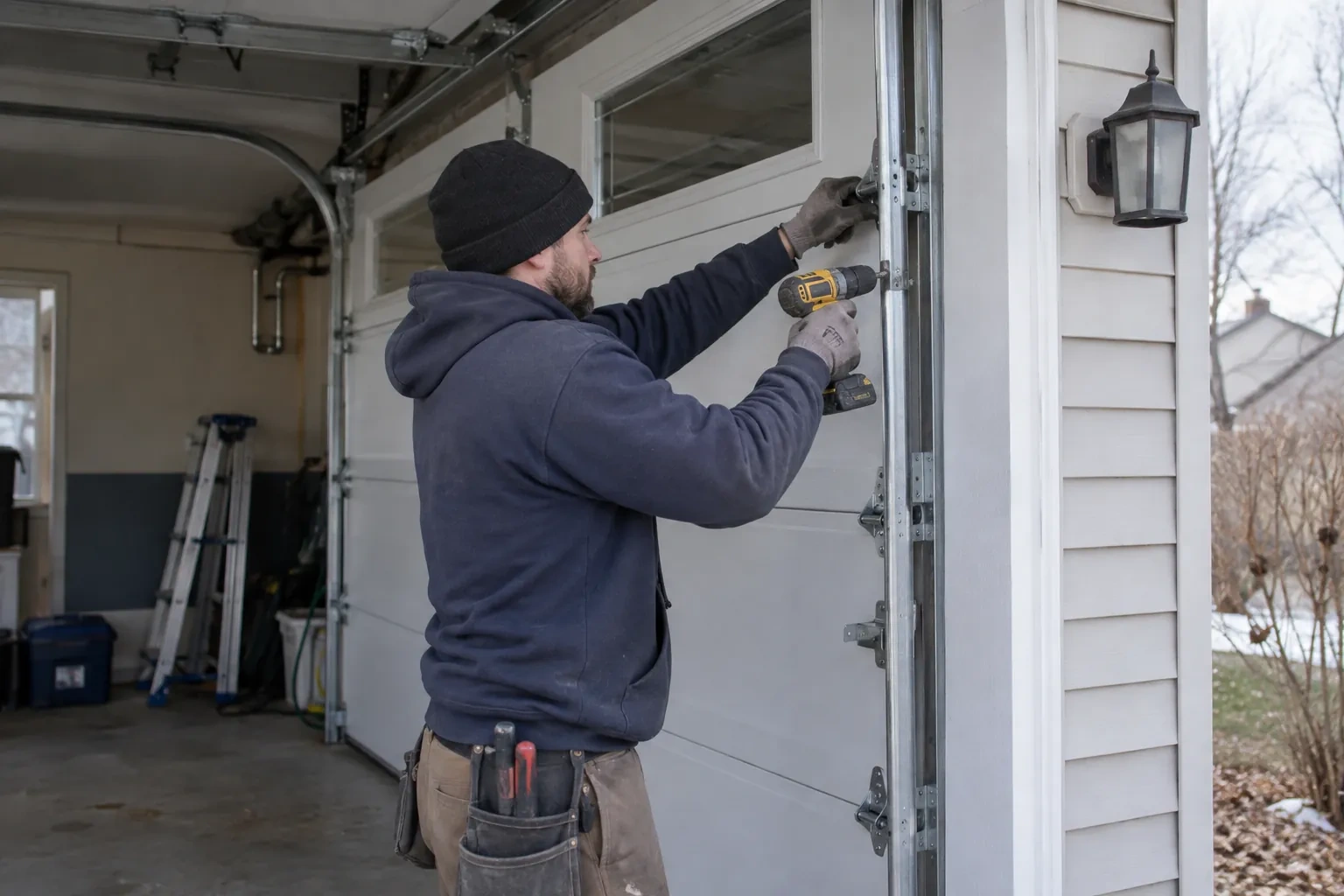
Extension Spring Replacement
What affects the quote
Getting the van to the garage
A detached garage down a shared laneway, a rural property or a building with the bay behind a gate takes more time to reach and set up in, and the quote allows for that.
Time of the call
An evening, weekend or holiday visit costs the same amount as a weekday daytime appointment for an extension-spring replacement. The technician confirms the exact figure once the springs, cables and door weight have been checked on site.
Opener adjustment and testing
Resetting the opener's force and travel to the newly balanced door and running the reversal tests is a short task that the quote names when it applies.
What to have ready
- Do the springs run along the tracks beside the door, or is there one spring above the opening?
- Does the opener still move the door, and does it sound strained?
- Does one corner of the door hang lower than the other?
Extension Spring Replacement: questions
QuestionsDo the pulleys need replacing at the same time?
Often, yes. Each side has two pulleys, one on the spring and one fixed at the front of the track, and the cable rides over both on every trip. A pulley whose wheel has worn a sharp groove, or whose bearing has stiffened, drags on the cable and adds load the spring has to overcome, which is a common reason the old spring wore early. Pulleys that spin freely and run true can stay.
Why does the door slam down the last bit?
A door that drops the final stretch is telling you the springs are no longer holding it. As an extension spring loses its temper it gives less pull near the bottom of travel, where the door needs the most support, so the door falls that last foot. Fresh springs matched to the door's weight bring the door down under control and take that shock off the bottom section and the opener.
Can I use the door as soon as the work is done?
Yes. The last steps of the visit are the balance test by hand, several full cycles under power and the opener's reversal checks, so the door is ready for normal use when the technician leaves. New springs need no settling period. It is worth running it yourself once or twice while the technician is still there, so you know what a properly balanced door sounds and feels like from now on.
Related services
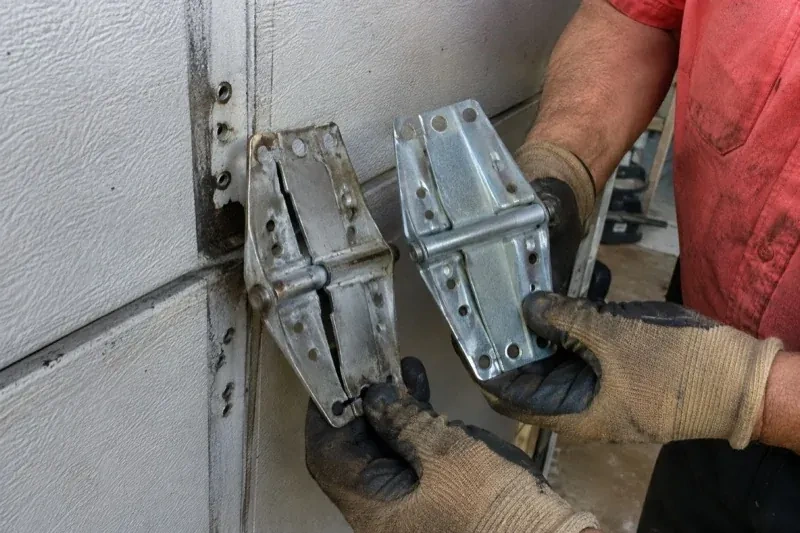
- Garage Door Hinge ReplacementPressing a hand against one of the middle hinges makes it rock on the panel.
- Garage Door Track Repair or ReplacementThe garage floor has settled at one corner, and the door now scrapes the concrete on that side while daylight shows at the other.
- Garage Door Cable ReplacementAfter years of slushy winters the cables look thinner near the bottom brackets, with rust streaks running down the door where they attach.