Openers · Brampton
Garage Door Opener Diagnosis and Repair
For a few days there was a grinding sound whenever the door started moving.
In plain words
Winter changes what an opener is asked to do. Grease in the gear case and on the rail thickens in the cold, rollers turn stiffly, and the bottom seal can freeze to the concrete overnight so the door is briefly glued shut. A force setting that was right in July now reads every one of those as an obstruction and stops. A cold-weather diagnosis sorts the seasonal from the structural: freeing the seal, lubricating the moving parts with a product made for low temperatures, checking that the balance is still right, and then confirming the force is low enough to stay safe while high enough to work.
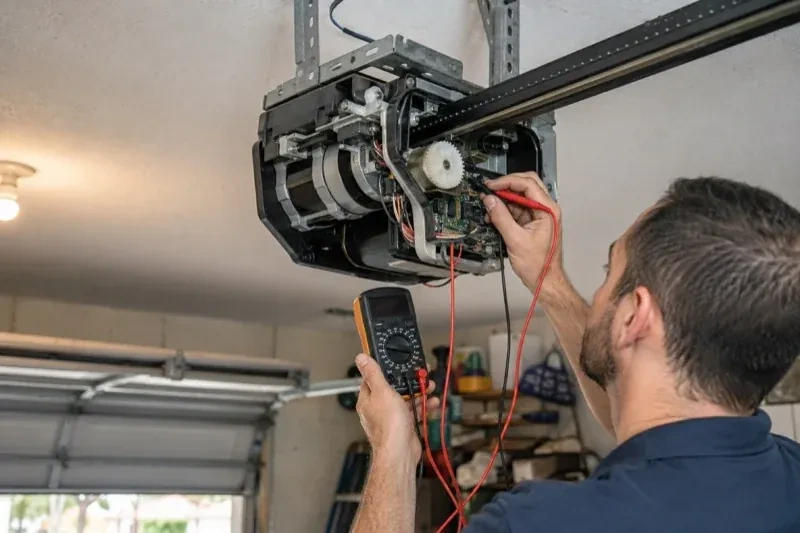
How the visit goesThe door goes up perfectly. Coming down is the trouble: partway to the floor it stops, climbs back to the top, and the light on the opener blinks at you. The only way to close it is to stand inside holding the wall button the whole way down.
Garage Door Opener Diagnosis and Repair
How the visit goes
One control at a time
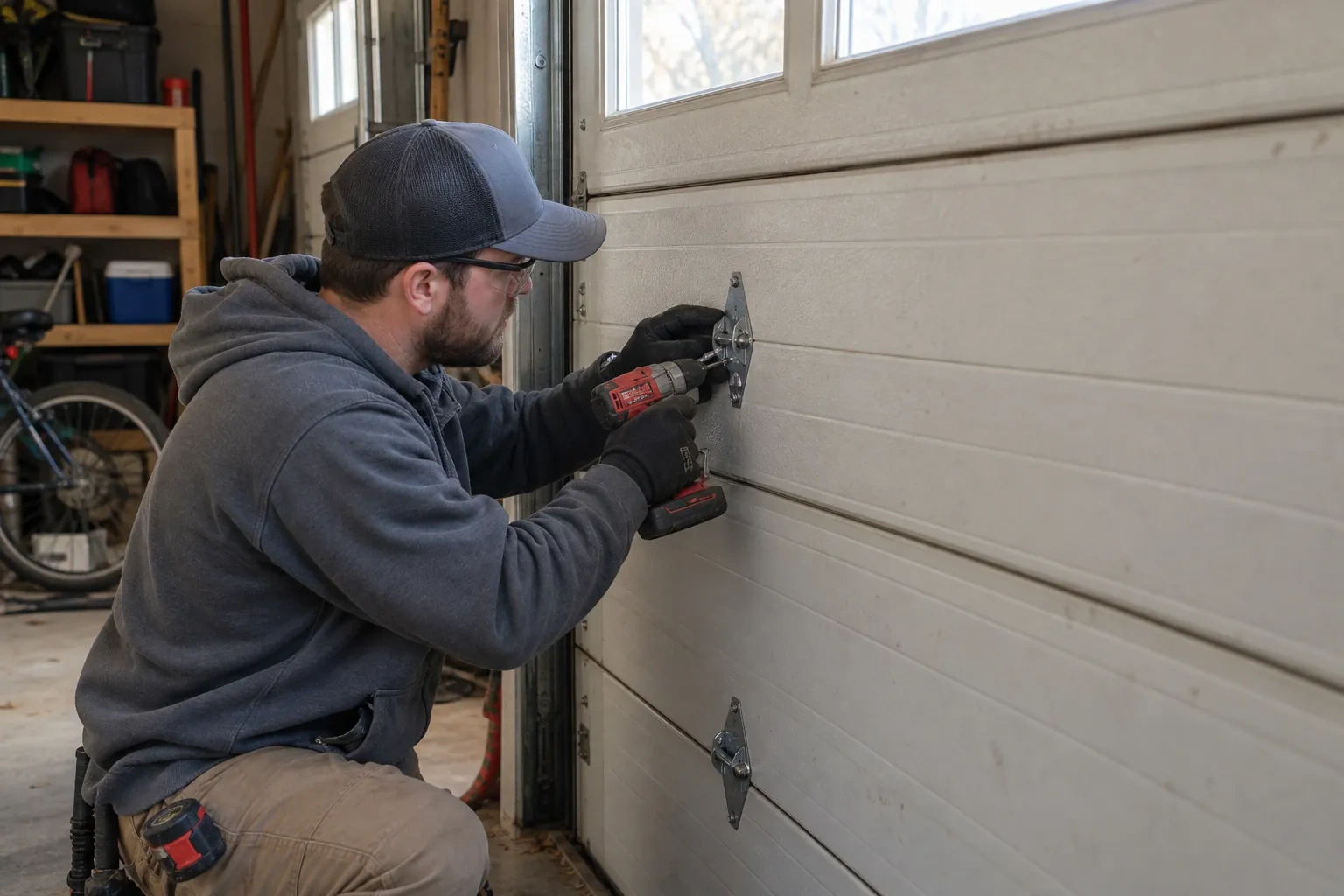
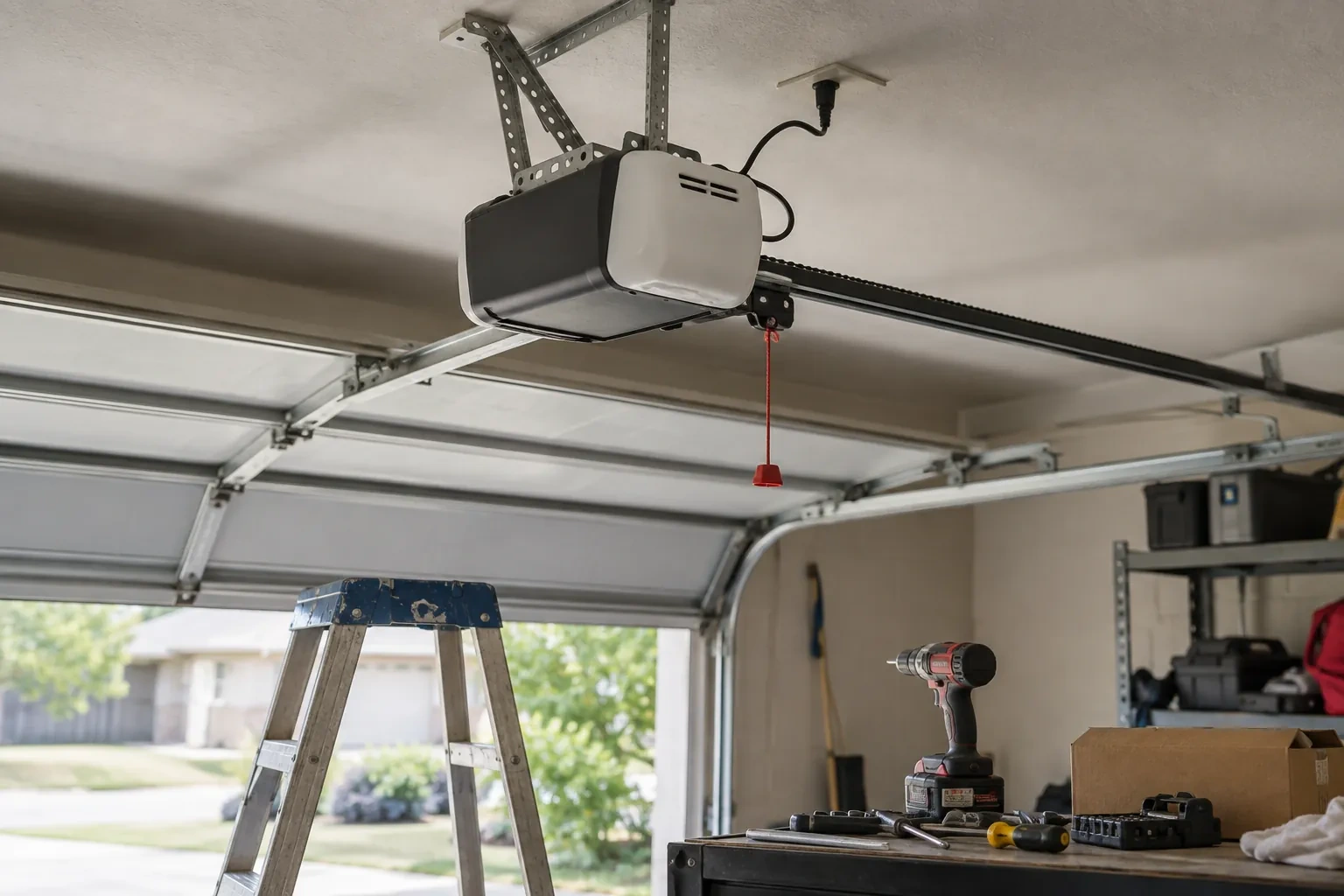
Each way of telling the door to move is tried on its own: the wall control, every remote, the outside keypad and, if fitted, the phone app. The pattern of what works tells a story. If the wall button works and nothing wireless does, the receiver, the remote batteries or a lock setting is suspect. If a remote works only up close, range and interference are the topic. If nothing at all works but the unit's light responds, the fault is downstream of the controls. The technician also checks the wall control's own indicator, which on most models blinks continuously when lock mode has been switched on by accident.
Setting travel and force, then proving them
Once the mechanical cause is dealt with, the opener is set up as if newly installed. Travel is adjusted so the door seals gently on the floor without hammering the slab and stops at the top clear of the header. Force is set as low as will reliably move the door through a full cycle in the current season, never higher. Then the door is closed onto a 2x4 lying flat on the floor and must climb back to open the moment it touches; and while closing again, a broom handle is passed through the beam and the door must stop and rise. Failing either means the setup is redone, not accepted.
The monthly test you can do yourself
You leave knowing a short check that catches most opener trouble early. Once a month, with the door open, lay a piece of 2x4 flat on the floor under the middle of the door and press close; the door should touch it and go straight back up. Then close the door again and pass a broom handle through the sensor beam near the floor; the door should stop and reverse. Watch the sensor lights stay steady. If either test fails, stop using the opener and book a visit. These are the same tests the technician just performed, and they are all the standard asks of a working unit.
Garage Door Opener Diagnosis and Repair
In the van
Transformer and board fuse
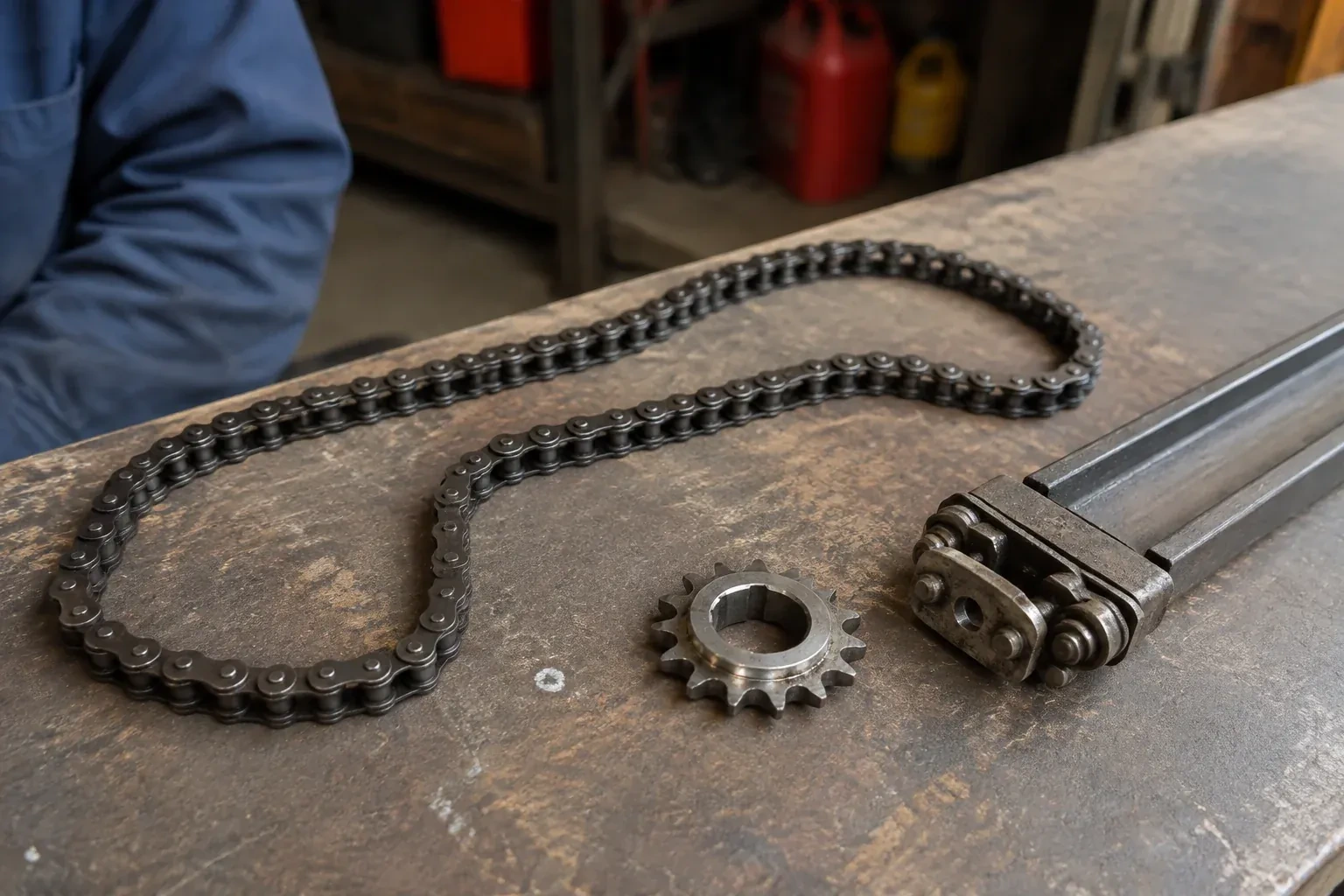
Drive gear and sprocket kit
Bell wire and clips
Travel limit switch or RPM sensor
Logic board or receiver
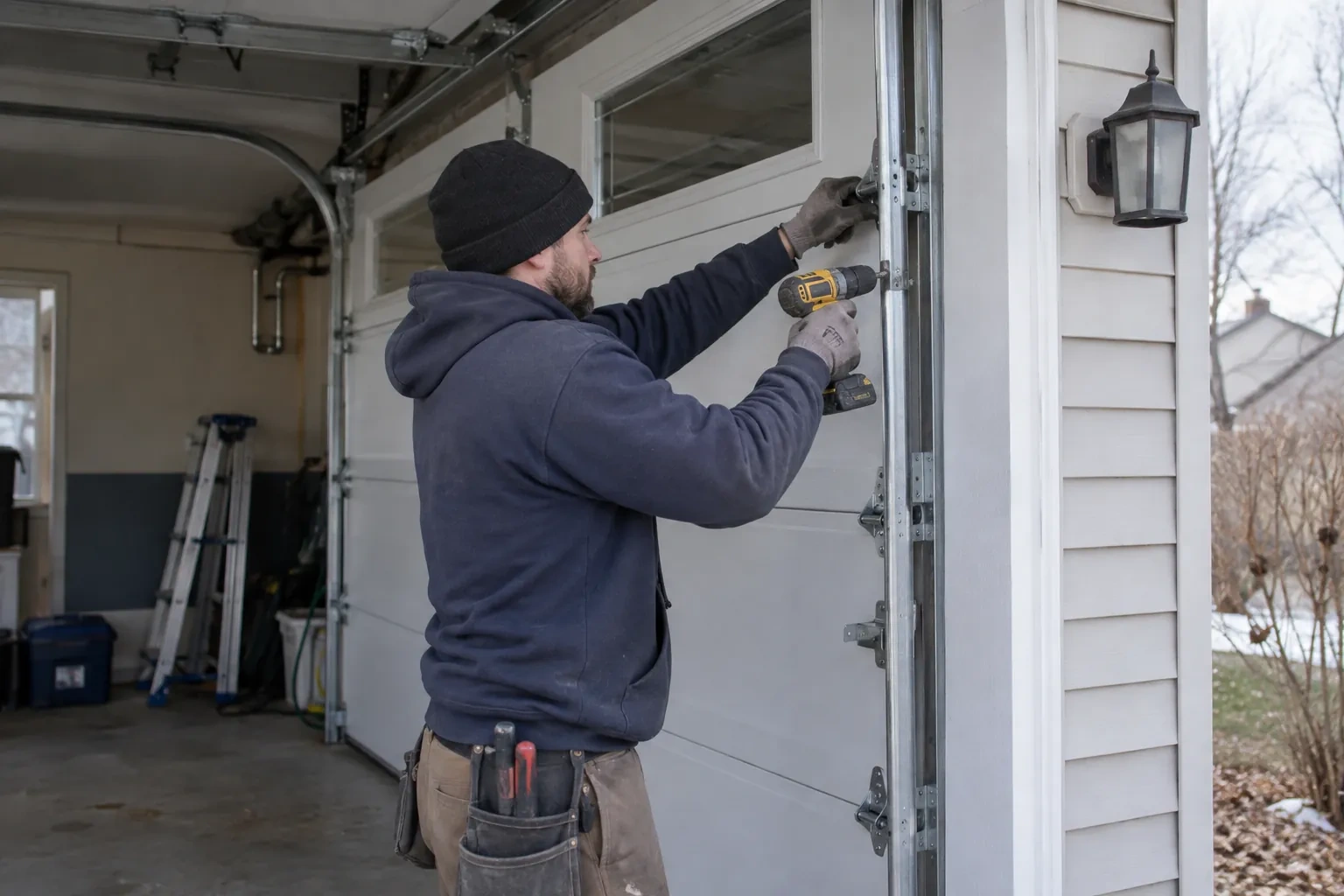
Garage Door Opener Diagnosis and Repair
What affects the quote
Wiring to be re-run
Damaged low-voltage wire to the sensors or the wall control is replaced along its whole length and clipped clear of the track, so the distance and route from head unit to door frame affect the time.
Whether the door needs work first
If the by-hand check shows a heavy or binding door, the balance, rollers or springs are corrected before the opener is judged, and that door-side work is quoted as its own item.
Age and model of the unit
Parts availability is checked by exact model and part number rather than assumed from age, since some units even from the last two decades already have a board or component discontinued with nothing to replace it. Sourcing a part, or replacement instead, shapes the quote.
What to have ready
- Did anything happen just before: a power outage, a storm, new bulbs, a bump?
- Has anyone pulled the red emergency release cord recently?
- Roughly how old is the opener, and is the model label readable?
Garage Door Opener Diagnosis and Repair: questions
QuestionsHow old is too old to repair?
Age alone is not the test; parts and safety are. The technician checks the exact model and part numbers, because even a unit from the last two decades can have a board, sensor or trolley that is no longer made. Where the parts are available, a repair is usually straightforward. Where a key part is discontinued with nothing to replace it, or the unit predates photo eyes, replacement is the sounder choice even for a small fault. The technician tells you which side of that line your unit sits on.
My opener has no photo eyes. Can it be kept in service?
Openers without an external sensor date from before 1993, when photo eyes or an equivalent device became part of the operator standard. The door industry's own inspection checklist and consumer safety regulators both recommend replacing such units rather than repairing them, because the contact-reversal feature alone is a weaker protection for anyone or anything under the door. A diagnosis on one of these units usually ends with a replacement recommendation, explained plainly.
Why does the door stop just above the floor and reverse?
Two usual reasons. The travel limit is set a fraction too long, so the door reaches the slab, meets it harder than expected and interprets that as an obstruction. Or the bottom seal has stiffened or frozen and the last few centimetres take more force than the setting allows. Both are adjusted after the door is checked for balance, and the fix is confirmed by closing the door several times and running the contact reversal test.
Related services
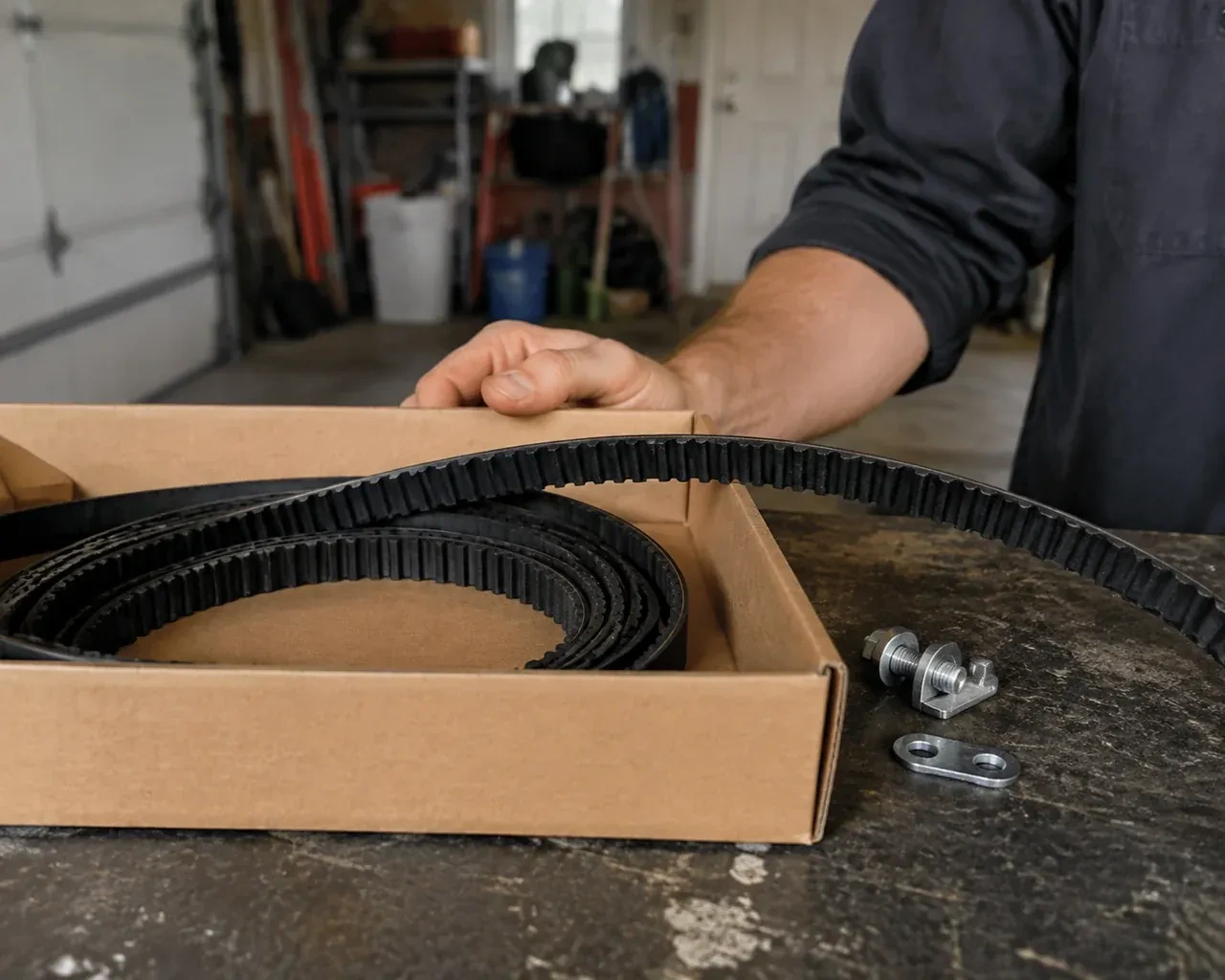
- Belt-Drive Opener RepairThe door used to glide up with a soft hum.
- Garage Door Opener ReplacementDuring the ice storm the power was off for two days.
- Photo-Eye Sensor Alignment or ReplacementThe small light on one of the sensors near the floor has gone dark, or it flickers when someone walks past the track.