Repairs · Bramalea
Garage Door Tune-Up in Bramalea
On windy nights the door rattles in its frame, there is a line of daylight along one side, and the bottom seal has gone hard and flat.
In plain words
A garage door tune-up is preventive care for a door that still works. Instead of waiting for a part to fail, a technician goes over the whole system while it is operating: the hinges, rollers and tracks, the springs and cables that carry the weight, the fasteners that vibration loosens, and the opener with its sensors and reversal. Loose hardware is tightened, the right points are lubricated with the right product, the balance is checked and the safety tests are run. You end the visit with a door that runs more smoothly and a clear account of anything that deserves its own repair.
How the visit goesOn windy nights the door rattles in its frame, there is a line of daylight along one side, and the bottom seal has gone hard and flat. Leaves and fine snow drift in underneath and the garage never seems to hold its temperature.
Garage Door Tune-Up
How the visit goes
Watching one full cycle first
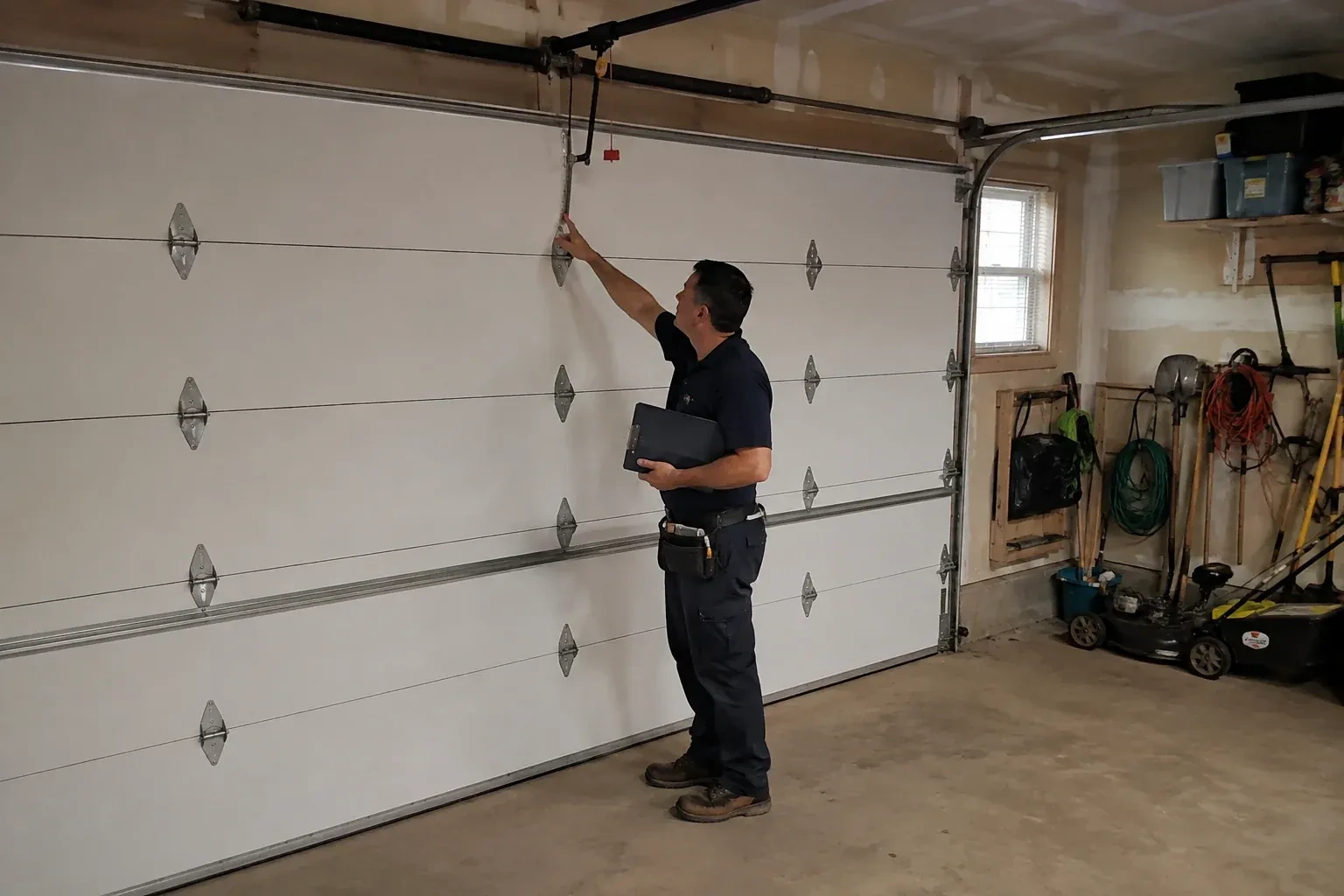
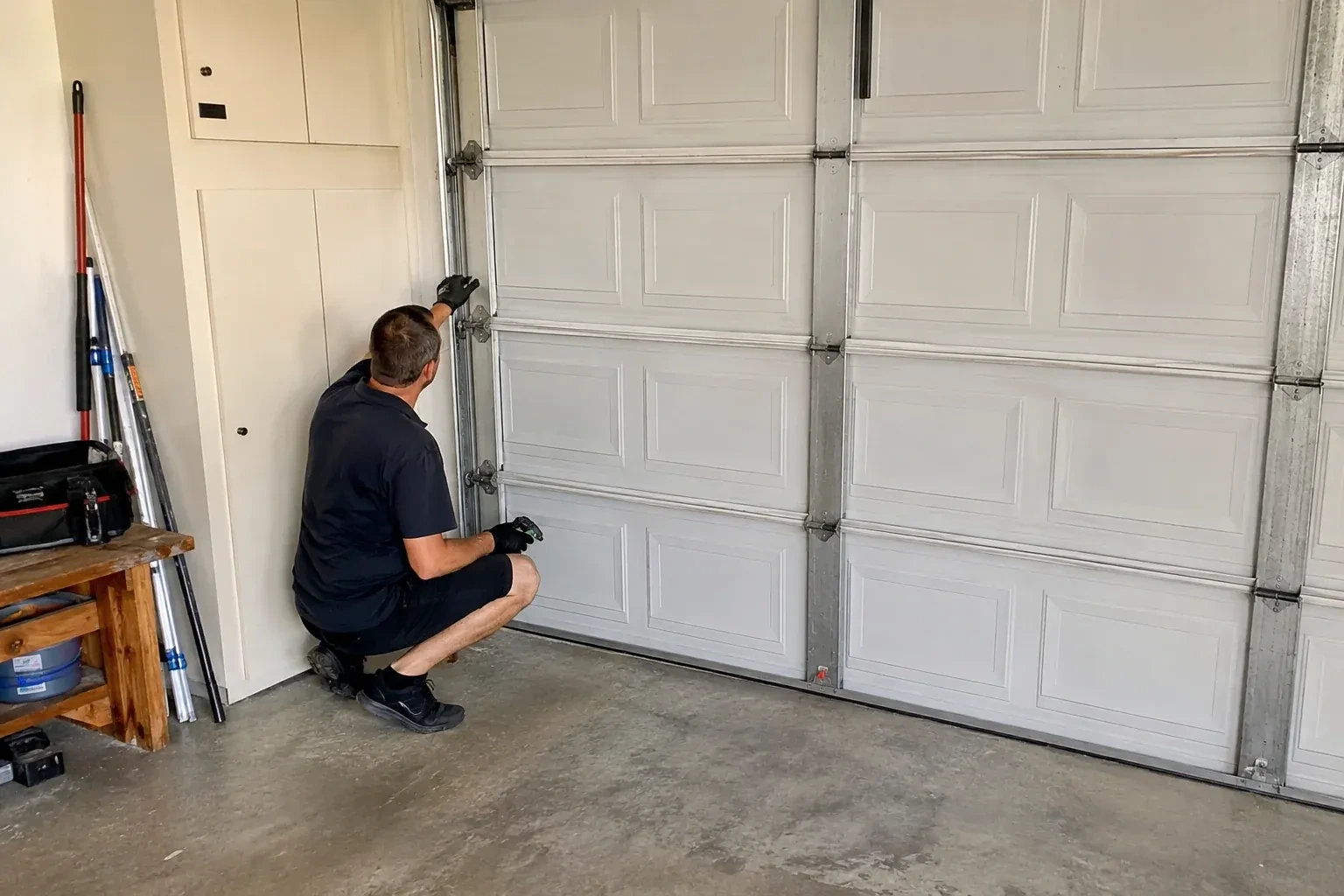
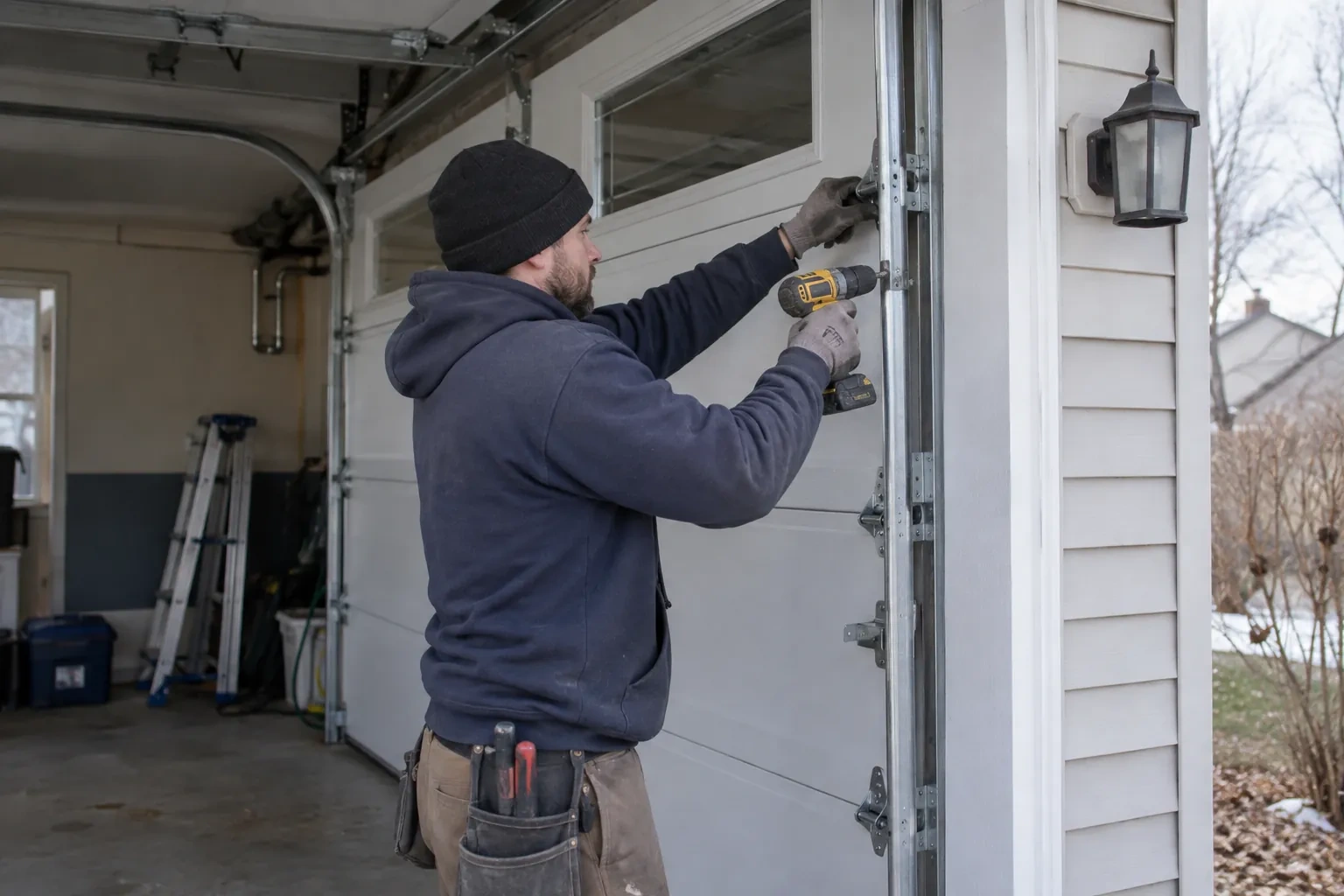
Before a wrench comes out, the technician stands clear of the opening and runs the door all the way up and all the way down. They are listening and watching at the same time: where the squeal starts, whether the sections shake at a particular height, whether the door hesitates at the curve of the track, how it lands on the floor, and whether the opener labours or hums. Each observation is tied to a spot on the door or a point in the travel. That map guides the hands-on inspection that follows and gives a fair comparison at the end, when the same cycle is run again after the work.
Lubricating the right points and skipping the wrong ones
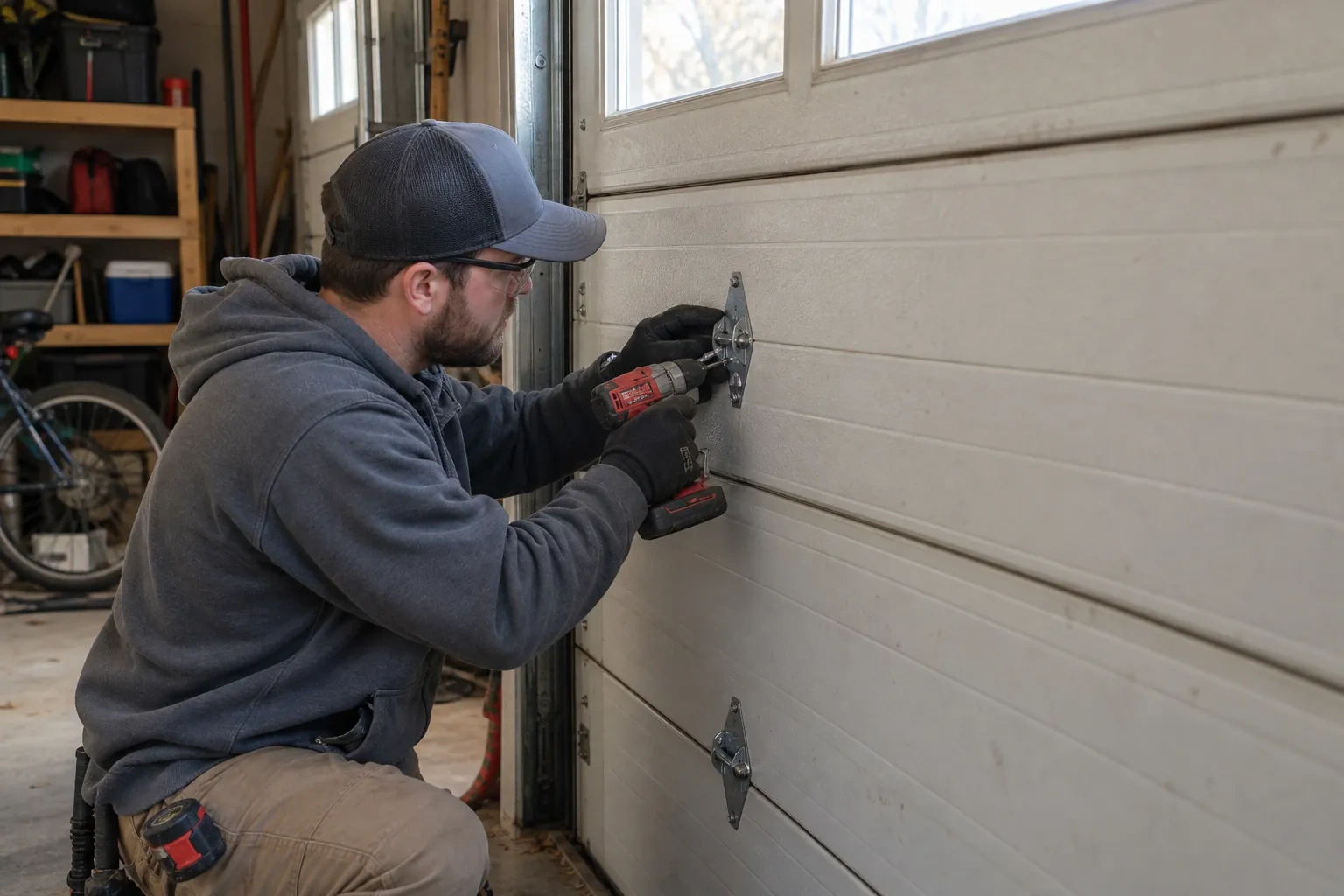
Each moving joint gets a small amount of silicone- or lithium-based lubricant: hinge pins, steel roller bearings, spring coils, the bearing plates at the torsion shaft ends, the centre bearing and the lock. The technician works the door a few centimetres by hand so the lubricant spreads into the bearings. What is not lubricated matters just as much: track surfaces are wiped clean and left dry so rollers roll rather than slide on a film that gathers grit. Nylon tires are left untreated, though an exposed nylon-roller bearing gets lubricant where its maker calls for it. The chain or belt is handled only as the opener maker directs, and excess is wiped off so it never drips onto a vehicle.
Balance you can feel with one hand
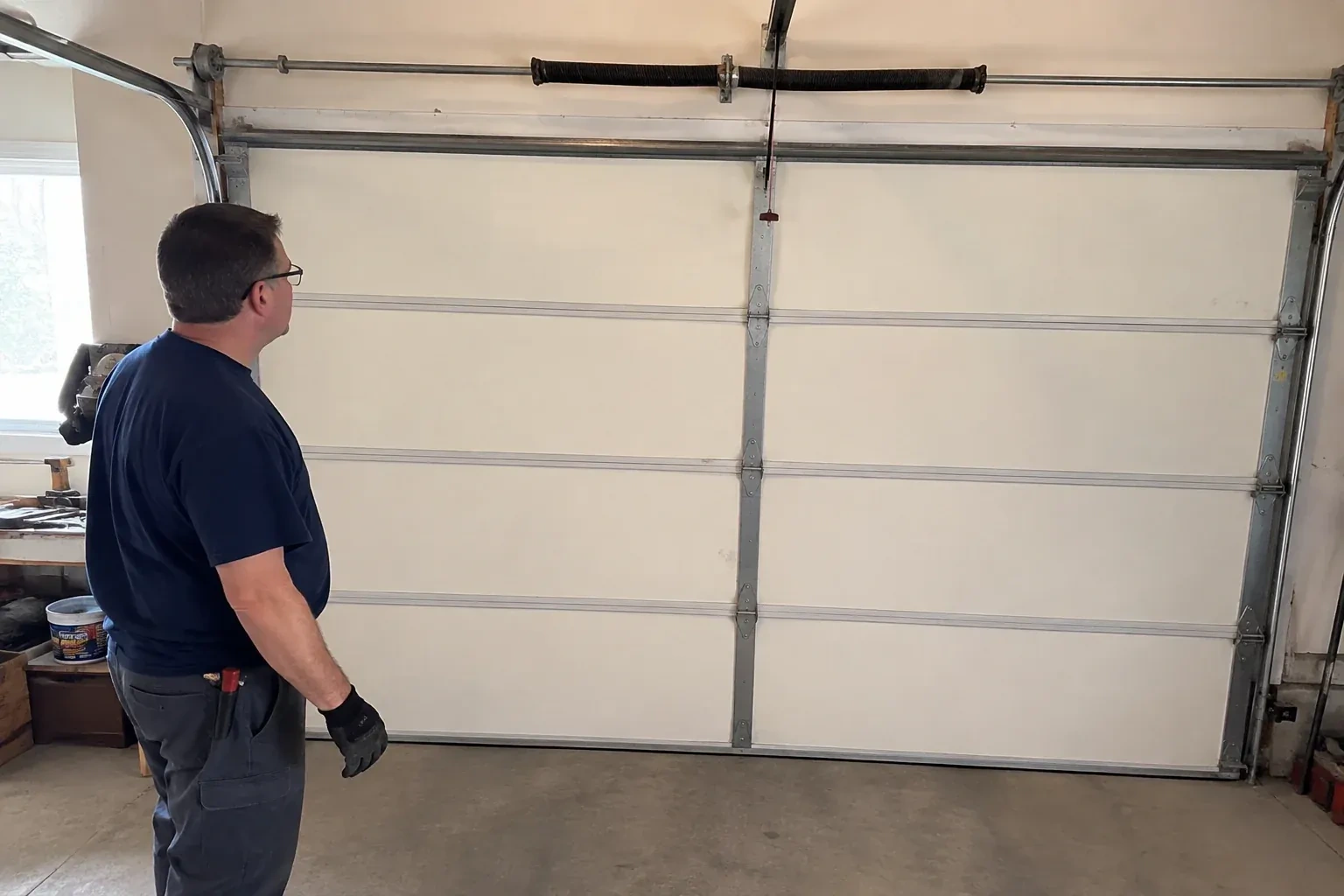
Before leaving, the technician shows you how to check the balance yourself: pull the red release with the door closed, lift the door by its handle, and feel it rise easily, stay open and hold still partway. Knowing what a balanced door feels like is the single most useful thing a homeowner can take from a tune-up, because a door that starts to sink or grow heavy over the coming year is telling you the springs are tiring, long before the opener fails. If the balance was found wanting on this visit, the operator is taken out of service until the spring work is done, and that finding is in your record with a separate quote.
Garage Door Tune-Up
In the van
Photo-eye brackets and wire
Silicone or lithium garage door lubricant
Replacement hinges
2x4 test block and tape measure
Jamb and header weatherstrip
Garage Door Tune-Up
What affects the quote
Upgrades you choose on the day
Quieter nylon rollers, a new bottom seal profile, a keypad or a battery backup for the opener are options some customers add while the technician is there, each priced as a separate line.
Balance findings
If the balance test shows the springs have lost tension, spring adjustment or replacement is a separate job with its own quote rather than part of the maintenance visit.
Number of doors
Two or three doors on the same property are usually serviced in one visit, and the second and third door are quoted at a different rate from the first because the travel is shared.
What to have ready
- Has the door been struck by a vehicle or damaged in a storm?
- Is the door worse in cold weather or after rain?
- Are the remotes, wall button and keypad all working as expected?
Garage Door Tune-Up: questions
QuestionsWhat kind of doors and openers do you service?
Residential sectional doors of every common construction: steel, insulated steel, aluminum and glass, wood and composite, single and double width, with torsion springs above the header or extension springs beside the horizontal tracks. Openers of all the usual types are covered too, including chain drive, belt drive, screw drive and wall-mounted jackshaft units. If the door is a one-piece tilt-up or a commercial rolling door, mention that when booking so the right hardware comes along.
What does a garage door tune-up actually include?
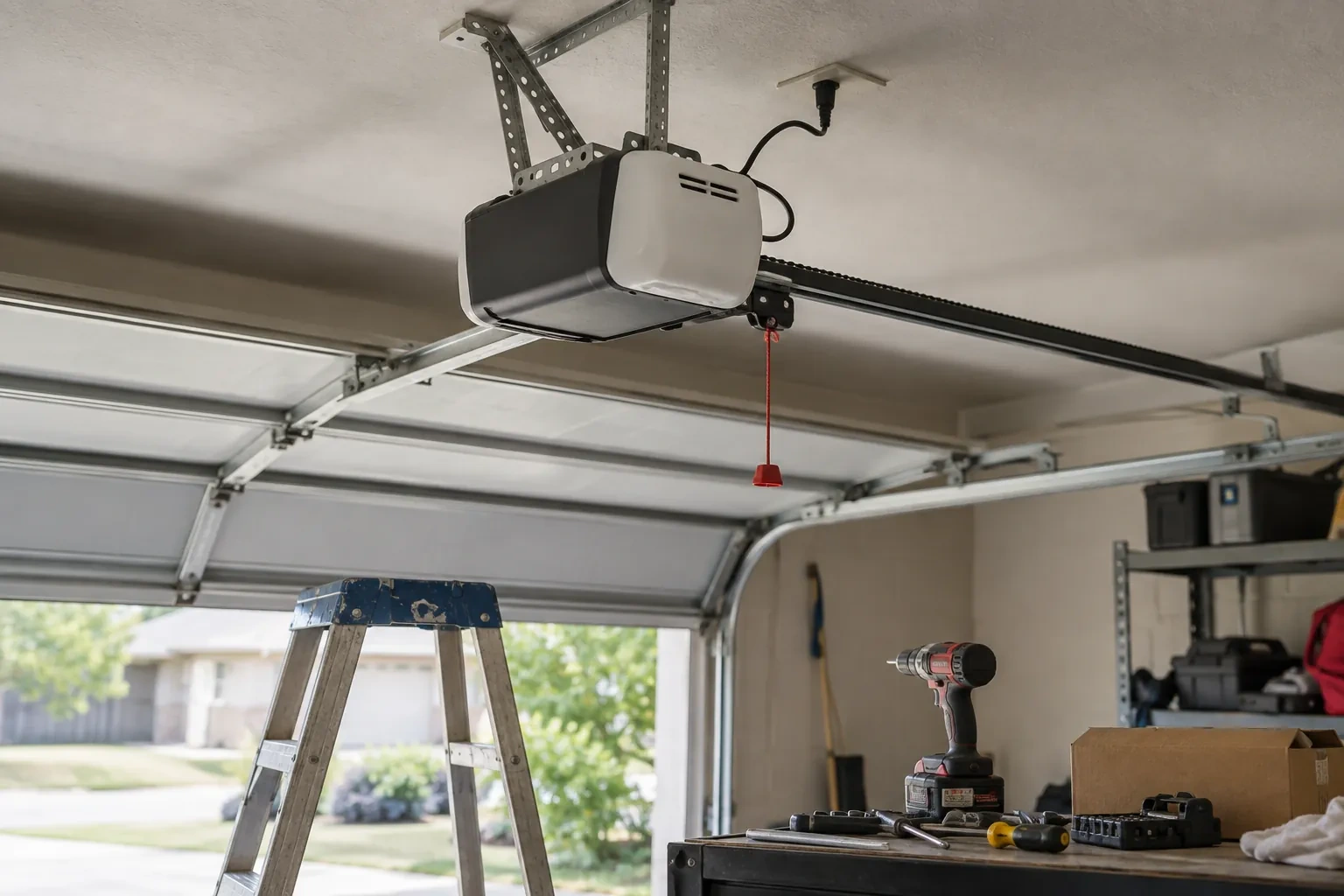
A full cycle observed before any work, a hands-on inspection of hinges, rollers, tracks, springs, cables, drums, brackets and the opener's attachments, tightening of the accessible fasteners, lubrication of the moving points with a garage door lubricant, a balance check with the door disconnected from the opener, adjustment of the opener's travel and force, cleaning and alignment of the photo-eyes, both reversal tests, a look at the seals, and a written record of the findings.
How long does a tune-up take?
For a single or double residential door with an opener, allow roughly an hour to two hours on site. The inspection and the two observed cycles take a fixed amount of time; the rest depends on how many fasteners have loosened, whether the sensors need realigning and whether you approve a small part replacement, such as a worn roller, during the same visit. Spring or cable work, if found necessary, is scheduled as its own job.
Related services
- Off-Track Garage Door ResetOne side of the door hangs a hand's width lower than the other.
- Garage Door Panel ReplacementA stray ball went through one of the window panes in the top section.
- Garage Door Bottom Seal ReplacementEvery mild afternoon the snow melts off the car, runs to the door, and by morning the rubber strip along the bottom is frozen to the concrete.