New Doors · Brampton
Commercial Rolling Door Repair
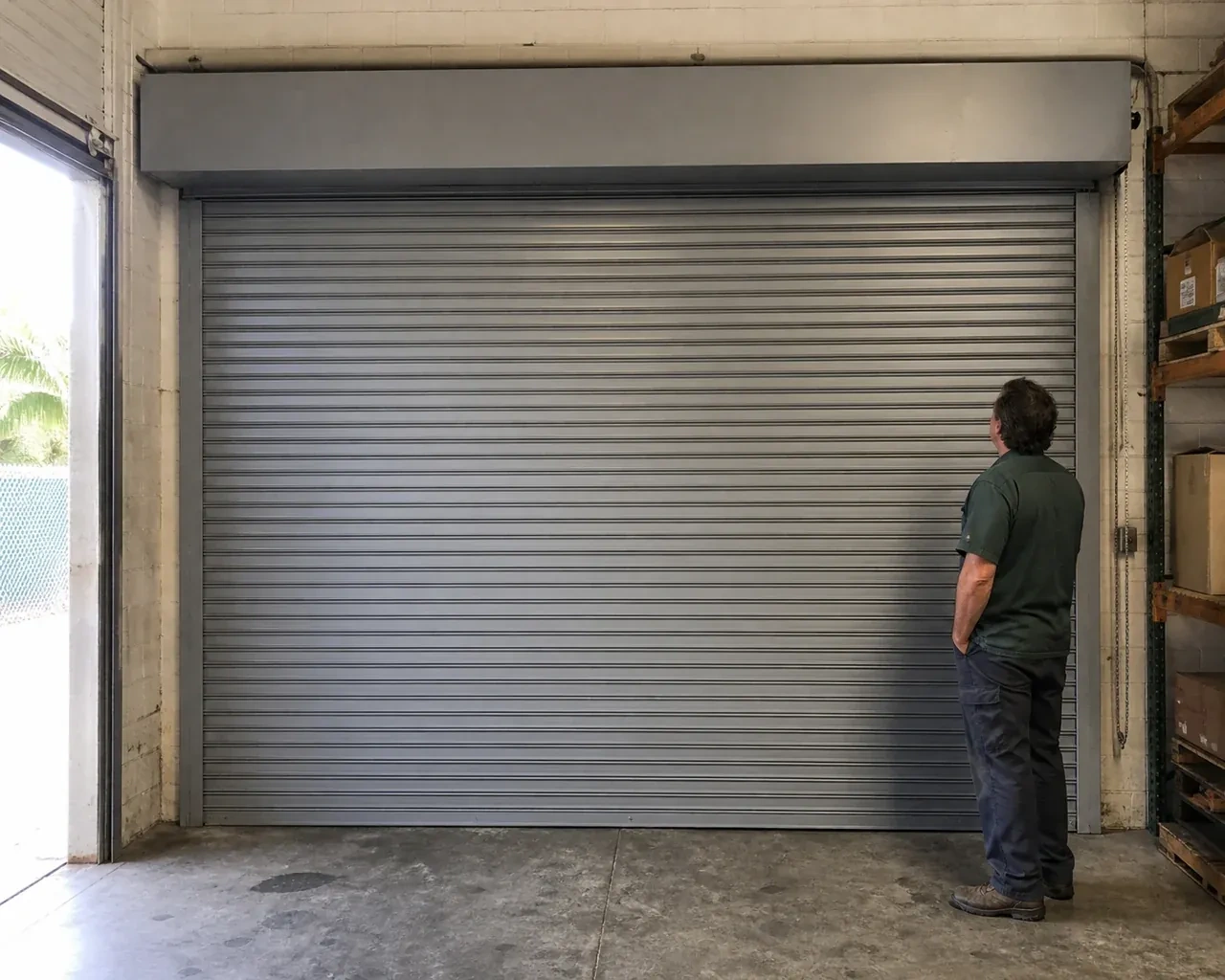
A lift truck clipped the lower curtain during unloading.
In plain words
Impact damage often looks local but changes the path of the entire curtain. A bowed bottom bar can spread a guide, a bent slat can pull endlocks sideways, and a struck jamb can alter the opening width. Repair begins with measurements at the guides and brackets as well as a close look at the damaged section. Serviceable slats or curtain sections can be renewed, guides realigned and fasteners restored using components that match the identified assembly. The final check watches the repaired area enter the coil, pass through both guides and meet the sill evenly.
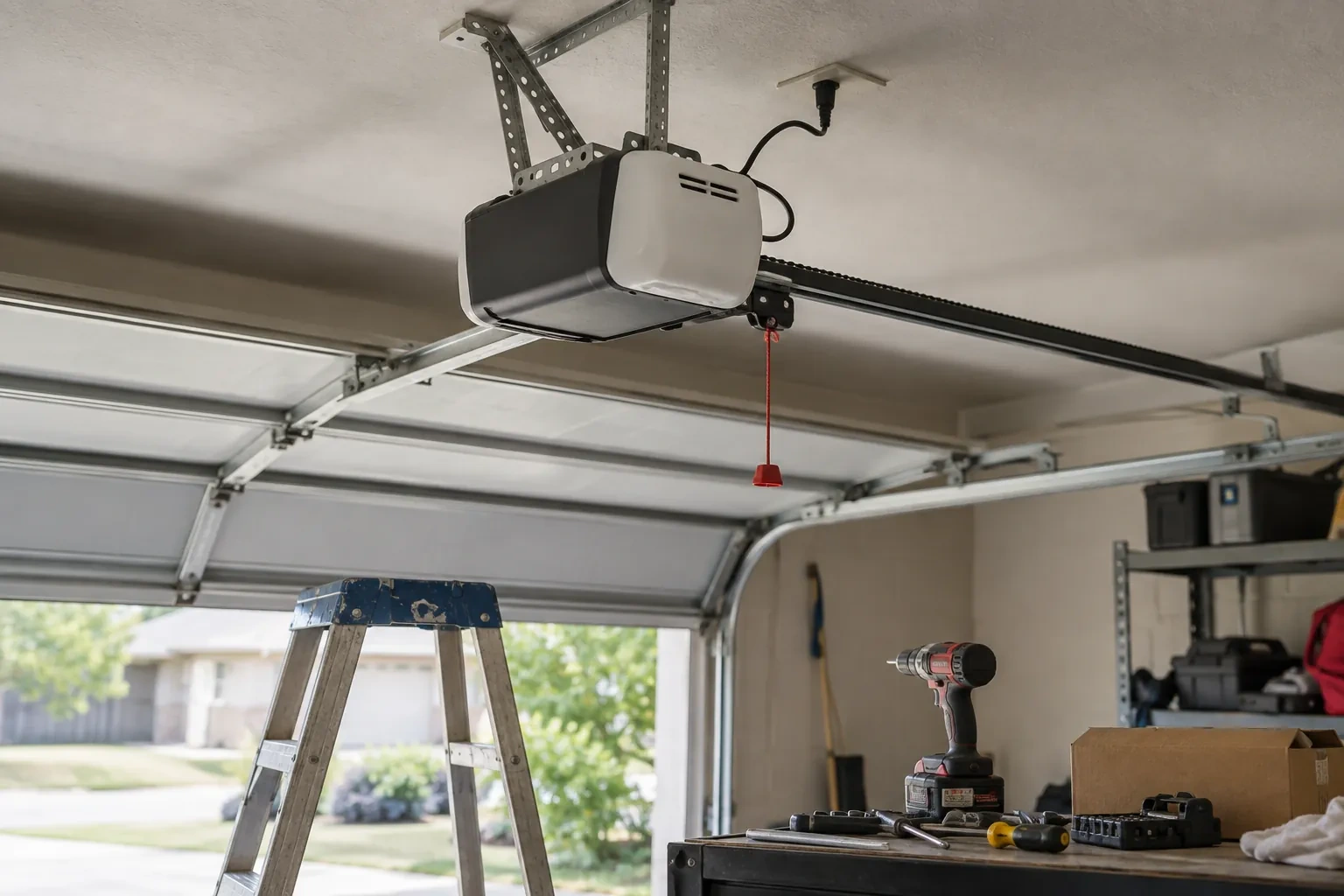
How the visit goesThe wall control asks the door to close, but the operator hums and stops. The curtain remains overhead while the control light and the photoelectric sensors suggest that the powered system needs a connected diagnosis.
Commercial Rolling Door Repair
How the visit goes
Start with the operating story
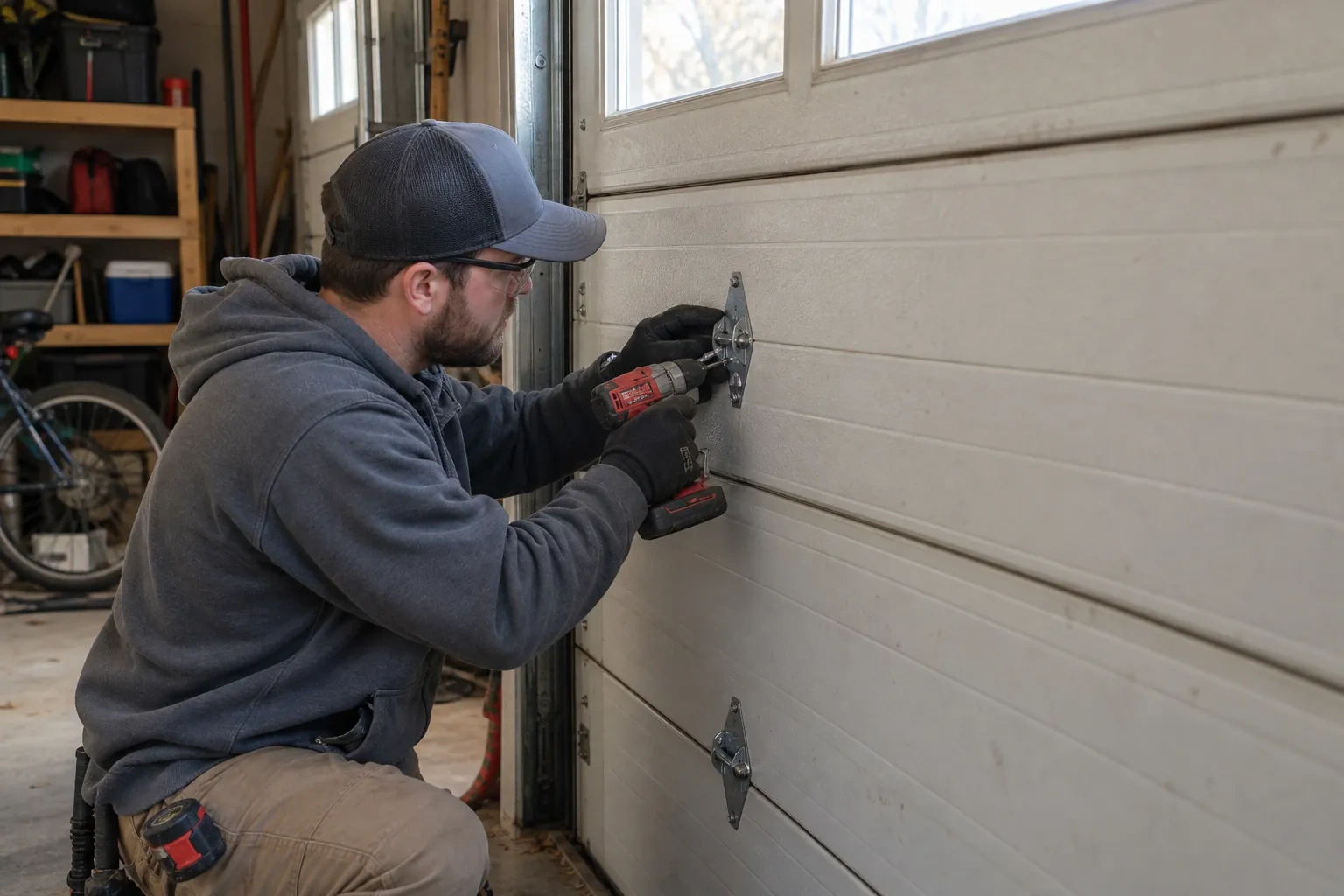
The first clues come from the people who use the opening. The technician asks whether the change appeared after an impact, power interruption, cold night or gradual increase in noise; where the curtain stops; which control was used; and how many cycles the door normally sees. Staff can also point out a lock that sticks, a manual chain that has become heavy or a sensor that needs repeated cleaning. That history narrows the inspection before any cycling begins and distinguishes a one-time obstruction from wear that has been developing across the whole assembly.
Renew damaged curtain sections
When damage is confined to serviceable slats or a section of sheet curtain, the affected material is brought to an accessible position and supported. Endlocks, windlocks or fasteners are removed in the sequence suited to that construction, the distorted pieces are separated, and compatible replacements are fitted with the correct orientation and spacing. Adjacent material is checked because impact can stretch joints beyond the obvious dent. The repaired curtain is guided through the opening by hand under control, confirming that the new section flexes into the coil and travels past the guide entrances without catching.
Controls with clear, separate functions
The handover distinguishes the wall station, key control, access input, photoelectric protection, sensing edge and any vehicle-detection accessory. Each device is demonstrated according to its role, and staff see the applicable response during a controlled test. Sensor lenses remain visible and clean, cables stay protected, and stored materials are kept outside the beam path. Private access codes are retained by the facility rather than written in a service record. With the functions separated clearly, a blocked beam can be handled as a housekeeping clue while an unusual operator response can be reported with useful detail.
Commercial Rolling Door Repair
In the van
Roller chain and sprockets
Windlocks and curtain fasteners
Bearings and tension wheel
Counterbalance spring assembly
Bottom bar and astragal
Commercial Rolling Door Repair
What affects the quote
Cause of the failure
Impact, gradual wear, corrosion, freezing, building movement and a control fault can produce similar symptoms. The verified cause determines whether cleaning, adjustment, component renewal or wider coordination belongs in scope.
Traffic-control requirements
Loading schedules, pedestrian routes, lift-truck lanes and access to both faces determine how the work zone is maintained. Facility support and alternate routing form part of the service plan.
Testing and documentation
Normal cycles, manual operation, protective responses, fire-door procedures and facility records vary by assembly. The proposal can name the demonstrations, measurements and written results included at handover.
What to have ready
- What vehicles and pedestrians normally use this doorway?
- Does the curtain carry a visible fire-protection label?
- Has manual effort, noise or travel changed gradually?
Commercial Rolling Door Repair: questions
QuestionsHow can repeated vehicle damage be reduced?
Start with the impact pattern and traffic route. Guide guards, bollards, visible floor markings, mirrors, revised staging, vehicle-detection accessories or a different control position may help, depending on the site. Operators should report contact before more cycles spread a guide or curtain defect. Any protective addition must preserve required clearances and door operation.
How often should a commercial rolling door be inspected?
Follow the door and operator manufacturers' intervals, adjusted for cycle count, exposure, impacts and facility conditions. Industry guidance supports periodic technician inspection at least annually for rolling doors, while a labelled fire door also follows the applicable fire-safety inspection and testing requirements. Visible facility checks between visits help identify changes early.
Why does the operator run but the curtain barely moves?
The door may be binding in a guide, held by a lock, poorly balanced, disconnected from part of the drive or affected by a slipping sprocket, chain or key. The operator itself may also have a brake or internal drive fault. Mechanical movement is checked before settings are changed so the motor is not used to overcome resistance.
Related services
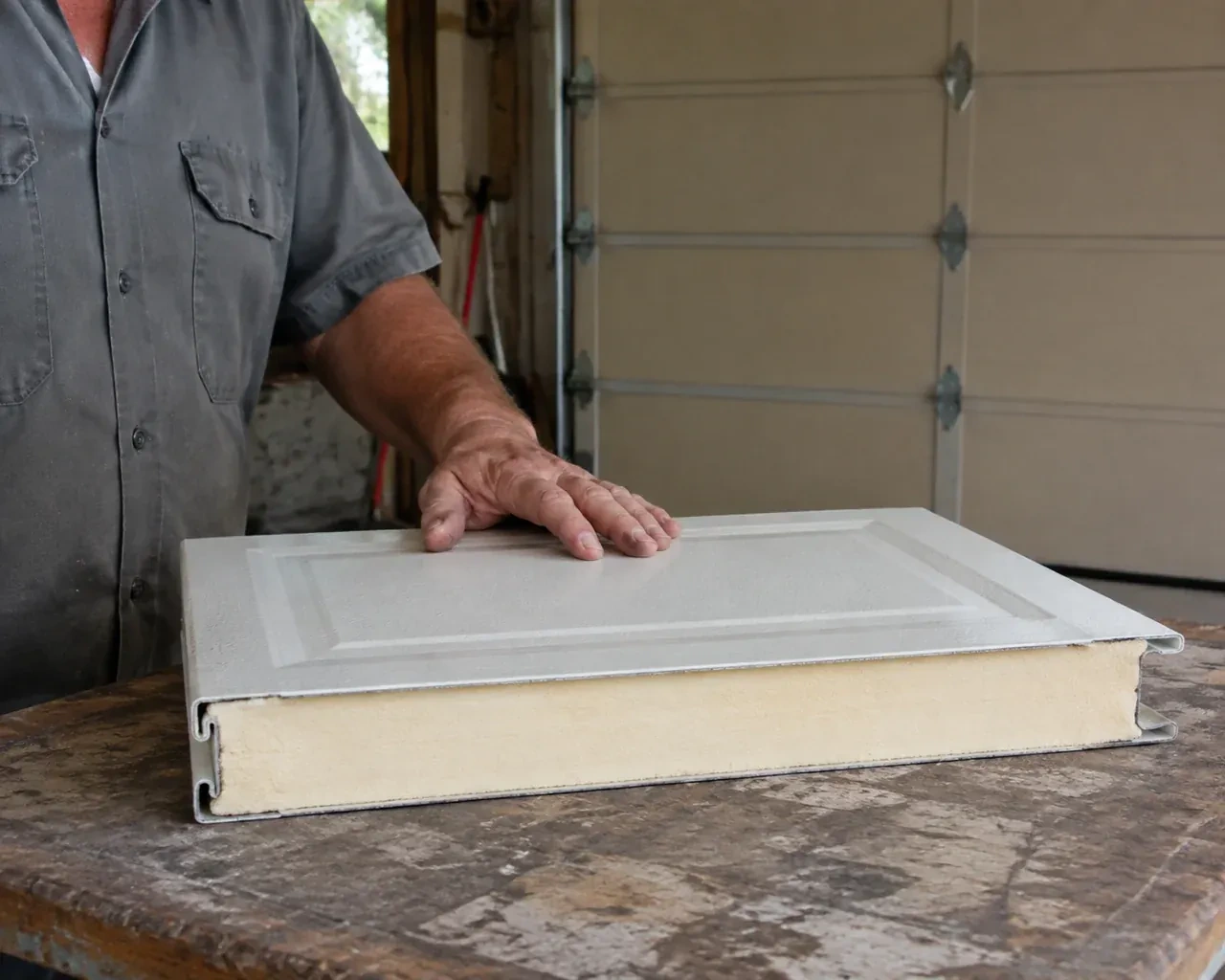
- Insulated Steel Garage Door InstallationDaylight appears beside the closed door and powdery snow collects just inside after windy weather.
- Wind-Rated Garage Door ReplacementNew windows would improve the door's appearance, but they also change the section layout and reinforcement pattern.
- Carriage-House Garage Door InstallationCold air is noticeable around the current door, especially near the floor and section joints.