Bramalea Garage Door Co. · Brampton
Garage Door Cable Replacement: what the visit covers
Garage Doors · Brampton, Ontario
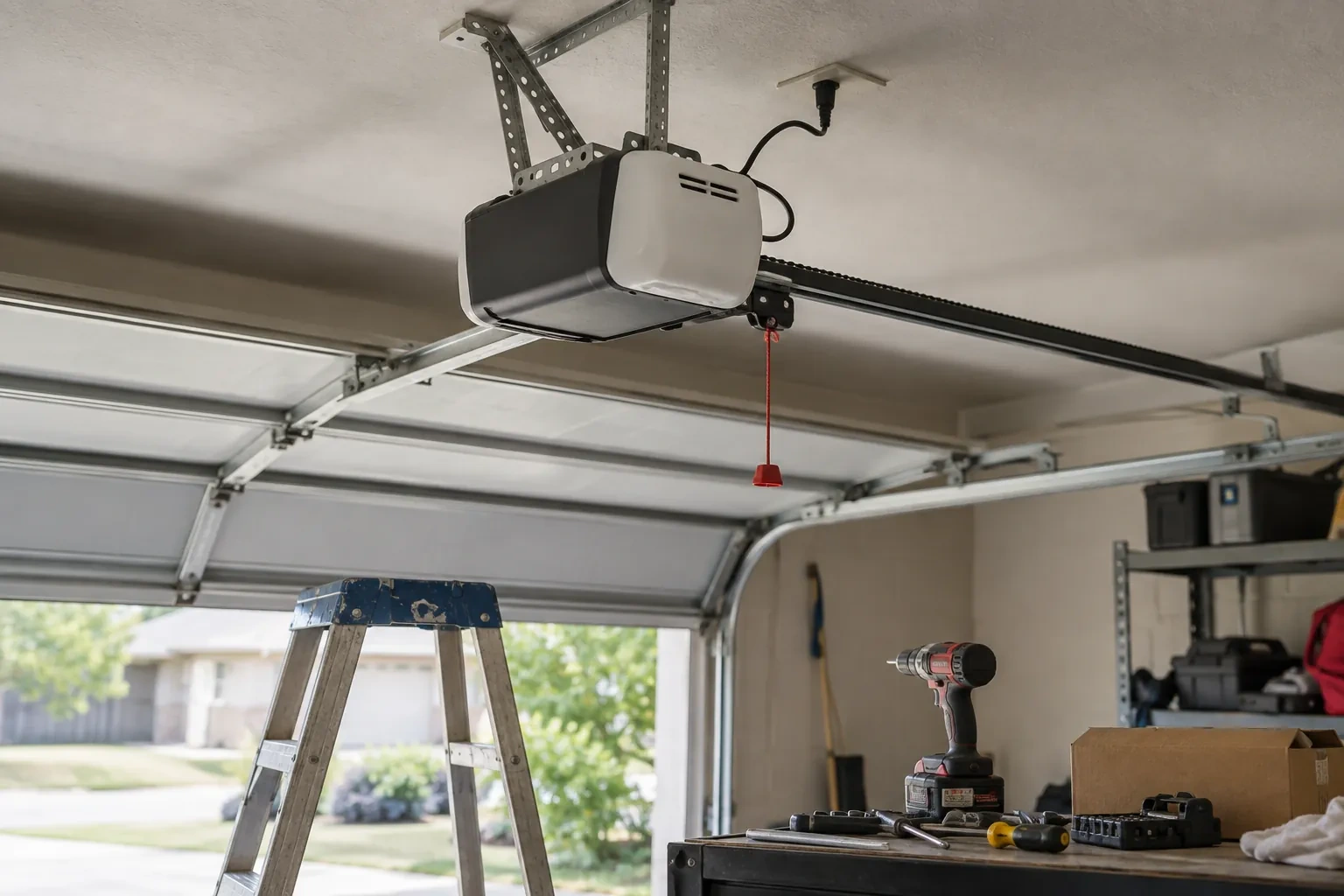
Which counterbalance your door has shapes the job. Torsion doors carry a spring on a shaft above the opening, and the cables wind onto grooved drums at each end; the technician winds the spring down with steel bars, swaps the cables, sets the drums and winds it back up. Extension doors, common on older detached garages, run the cables over pulleys beside the horizontal tracks with a spring stretched behind each; here the door is opened and clamped so the springs relax, then the cable is threaded, adjusted at its clip and checked against its containment cable. Either way, the service ends with a balanced door.
Springs and balance behind the cable
Cables only carry what the springs give them, so the springs are checked next. On a torsion system the technician looks for a gap in the coil that means a break, measures the wire and length to confirm the spring suits the door weight, and notes whether both springs on a double door match. On an extension door each spring is checked for stretch, a broken end or a missing containment cable through the middle. A weak or mismatched spring leaves one cable slack and the door heavy on one side, and if that is the story behind the cable, the spring work is explained and quoted alongside rather than left to surface later.
Fitting cables that match the door
The replacement cables are chosen for construction, diameter and length rather than taken from a general bin. Residential doors use galvanized aircraft-type wire rope, and the length depends on the door height, the drum profile and the lift type; a high-lift door or a double door has its own requirements. The swaged stop on the new cable is seated in the drum slot and the cable is wrapped in the groove in the correct direction, leaving the drum on the side that leads straight down to the bracket. At the bottom, the loop goes over the bracket pin and is secured. The other side is fitted the same way.
Checking the balance yourself, safely
You can confirm the door is still balanced any time without touching a spring or cable. With the door closed, pull the opener's release cord so the trolley disconnects, then lift the door by its handle or a safe gripping point to about waist height and let go gently. A balanced door should not lift or fall far on its own; a little slow drift is normal, and what calls for a technician is rapid movement, a heavy feel, binding in the track, or a result outside the manufacturer's balance instructions, not drift alone. Reconnect the opener as the manual describes, usually by running it once. Doing this each season catches wear early and keeps the opener working lightly.